Leave Your Message

How to Choose the Right Cylinder Liner?

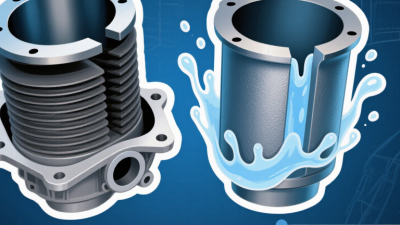
Choosing the right Cylinder Liner starts with the engine, not the parts catalogue. The liner must match the block design, bore size, operating load, cooling arrangement, and service conditions. A dry liner relies on close contact with the block for heat transfer; a wet liner contacts coolant directly and needs reliable sealing. Small differences matter. Incorrect fit or finish can contribute to poor heat transfer, uneven wear, or leakage.

The stakes extend beyond one component. The U.S. EPA’s Inventory of U.S. Greenhouse Gas Emissions and Sinks (2024) reports that transportation produced 28% of U.S. greenhouse-gas emissions in 2022. This is not a measurement of liner performance, but it underscores why durable, efficient engines matter. For component-level guidance, MAHLE Motorservice’s technical information on cylinder components covers liner construction, surface finish, and installation considerations. Use such guidance alongside the engine manufacturer’s specifications, rather than as a substitute for them.

Check the details. Confirm the liner’s material, dimensions, flange design, and required protrusion against the service manual. Consider the fuel, duty cycle, maintenance history, and signs of cavitation or bore wear. A technically compatible liner may still be the wrong choice for severe, continuous loading. And a worn block can complicate selection. No catalogue can fully judge that condition from a distance; careful measurement is still essential.
How to Choose the Right Cylinder Liner?

Identify the Engine’s Operating Requirements

A cylinder liner should match the engine’s real working conditions, not just its bore size. Note the engine type, rated speed, typical load, and hours of continuous operation. A generator running steadily under heavy load faces different demands from a vehicle engine with frequent starts and rapid speed changes. Record coolant temperature, oil grade, fuel type, and any history of overheating or abrasive wear. Small details matter.

Tips: Check the service manual for bore dimensions and liner specifications. Measure the cylinder at several heights and directions; wear is rarely perfectly even. Confirm whether the design uses a wet or dry liner, since installation and cooling requirements differ. Keep the measurements.

Consider the operating environment, too. Dusty air, poor cooling airflow, and long idle periods can affect wear and thermal stability. Match the liner material and surface finish to the engine maker’s stated requirements, and inspect the block for corrosion, cracks, or distortion before fitting a replacement. A new liner cannot correct a damaged block. It is tempting to choose by price or availability, but that can overlook the actual cause of failure. In practice, the operating record may be incomplete, so verify assumptions with inspection and measurements rather than treating them as facts. If the duty cycle or specification is unclear, pause and consult a qualified engine technician.
How to Choose the Right Cylinder Liner: Identify the Engine’s Operating Requirements

Mean piston speed is one operating factor to consider: higher speeds can increase friction, heat, and liner wear, making suitable materials, surface finish, and lubrication important.

Indicative representative values only; actual mean piston speed depends on engine design and rated speed. Confirm operating limits and liner specifications using the engine manufacturer’s data.

Choose Between Dry and Wet Cylinder Liners

How to Choose the Right Cylinder Liner?

Choose Between Dry and Wet Cylinder Liners

A dry liner sits inside the engine block, without coolant touching its outer surface. The block supports it closely. This design can suit engines where compact construction and a rigid block are priorities. Installation often requires accurate machining, because a poor fit can affect heat transfer and liner stability. Small details matter.

A wet liner contacts coolant directly and is usually sealed with O-rings near its lower end. It can transfer heat efficiently and may be simpler to replace during an overhaul. But those seals need careful inspection. Coolant leaks, corrosion, or incorrect installation can cause serious trouble. It is tempting to assume wet liners are always easier to service. That is not necessarily true; access and engine design can change the job considerably. Check the engine’s service information before choosing, and compare the liner type with its original specification.

Tips: Look for coolant staining around wet-liner seals and check for cracks or wear on either type. Confirm liner protrusion and sealing requirements with reliable service data. If measurements are unclear, pause and ask a qualified technician. Guesswork is costly.

Match Liner Dimensions to Engine Specifications

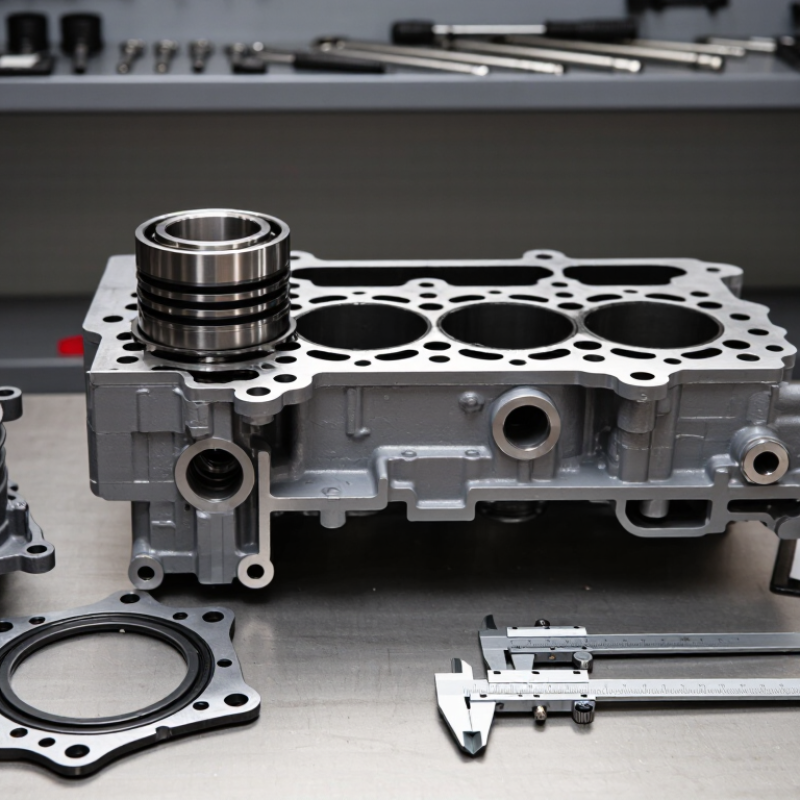
A cylinder liner can share the correct nominal bore and still be the wrong fit. Match its bore, outside diameter, overall length, flange height, and required deck protrusion to the engine’s service specifications. Check the specified clearance and interference fit, too. ISO 286-1 provides a system for limits and fits, but it does not replace engine-specific tolerances. Measure the block and liner with calibrated tools, at several heights and in two perpendicular directions. Measure it cold. A single reading can miss taper or out-of-round wear.

Temperature changes matter. The ASM Handbook reports a linear thermal expansion coefficient of roughly 10–12 × 10⁻⁶ per kelvin for gray cast iron. For a 100 mm diameter, a 100°C rise represents about 0.10–0.12 mm of free expansion; actual growth depends on the assembly and operating conditions. Small differences matter. Confirm whether the specified bore is finished, or whether honing allowance remains. Also verify liner protrusion against the stated measurement method, since gasket compression depends on it. I would recheck the figures before installation; matching a catalog dimension alone is not enough.

Evaluate Material, Cooling, and Wear Resistance

A cylinder liner must suit the engine’s load, temperature range, and maintenance conditions. Cast iron is common because it resists scuffing and holds its shape under pressure. Some engines use alloyed materials for improved heat transfer or reduced weight. Neither choice is automatically better. Check the engine specifications and confirm the liner material is compatible with the block, piston, and coolant.

Cooling deserves close attention. Wet liners contact coolant directly, so inspect sealing surfaces and follow the specified coolant requirements. Dry liners rely on heat transfer through the block; poor contact can create hot spots. Wear resistance also depends on more than material. Bore finish, lubrication, operating temperature, and dust entering through the intake all affect service life. A highly wear-resistant liner can still fail early if installation clearance is wrong. That detail is easy to underestimate.

Tips: Ask a qualified machinist to measure the bore and verify liner protrusion after installation. Look for uneven polishing, scoring, or discoloration during inspection. Real operating conditions may differ from the ideal test setup, so review wear patterns before choosing a replacement.

How to Choose the Right Cylinder Liner? - Evaluate Material, Cooling, and Wear Resistance

Compare common liner materials and cooling arrangements before selecting a cylinder liner.
Liner option Material characteristics Cooling arrangement Wear and scuffing considerations Typical selection fit Key checks before choosing
Gray cast iron, dry liner Graphite flakes support machinability and can help retain lubricant. Commonly used where the liner is supported by the engine block. Coolant does not contact the liner directly. Heat passes through the liner and block to the coolant jacket. Can provide good ring-running behavior when the bore finish, lubrication, and ring material are correctly matched. Poor lubrication or overheating can cause scuffing. Engines designed for a replaceable liner fitted into a water-jacketed block, especially where a compact, supported liner is required. Check block-bore fit, liner wall thickness, interference or clearance requirements, bore finish, and the engine maker’s service limits.
Alloyed cast iron, dry liner Cast iron with alloying additions such as chromium or molybdenum may be specified to improve hardness or strength. Actual properties depend on grade and heat treatment. Indirect cooling through the block, as with other dry liners. May offer improved wear resistance in applications with higher loading, but a harder surface is not automatically better; ring compatibility and lubrication remain critical. Engines needing a dry liner with higher wear or thermal-load capability than the original design’s basic cast-iron specification. Confirm the specified alloy and hardness, ring compatibility, honing requirements, and whether the block can accommodate the liner.
Gray cast iron, wet liner Often designed with a flange and sealing surfaces so the liner forms part of the coolant boundary. Coolant contacts the outside of the liner directly, allowing direct heat transfer. Seals prevent coolant from entering the crankcase. Wear behavior depends on the bore material and finish, piston-ring pairing, lubrication, and operating conditions. Coolant-side corrosion or cavitation can also affect service life. Engines designed for removable wet liners, where serviceability and direct heat transfer are priorities. Check liner protrusion, flange seating, seal material and installation, coolant condition, corrosion protection, and cavitation-control requirements.
Alloyed cast iron, wet liner Uses an alloyed cast-iron bore in a wet-liner design; the specific composition and treatment should match the engine specification. Direct coolant contact provides heat transfer, while the liner’s sealing system isolates coolant from the crankcase. Potentially suited to demanding wear conditions, but surface finish, ring pairing, coolant chemistry, and protection against cavitation are all important. Heavy-duty or high-load engines whose design calls for a wet liner and a specified alloyed-iron bore. Verify alloy specification, liner projection, sealing arrangement, coolant compatibility, and the prescribed installation and honing procedures.
Steel liner or steel-based liner Steel can provide high strength, but the grade, surface treatment, and liner design vary substantially between applications. May be used in dry or wet configurations, depending on the engine design and sealing arrangement. Wear performance depends strongly on surface treatment or coating, bore finish, and piston-ring pairing; untreated steel should not be assumed to suit every ring system. Specialized or high-load applications where the engine is specifically engineered for a steel-based liner. Confirm the exact material and coating, ring compatibility, corrosion protection, machining instructions, and availability of the correct replacement specification.

Selection note: Use the engine manufacturer’s specification as the deciding reference. Material names alone do not define hardness, wear life, or interchangeability; bore geometry, liner fit, surface finish, rings, lubrication, operating temperature, and coolant condition all affect performance.

Verify Compatibility with Installation and Maintenance Needs

A cylinder liner must match the block’s bore, deck height, cooling design, and service procedure—not just the engine’s model description. Confirm whether the block accepts a wet or dry liner, then check the specified liner protrusion, sealing-ring arrangement, and required surface finish. These details affect sealing and heat transfer.

Small details matter.

Measure the block and compare results with the engine’s service data; do not assume a replacement will fit because its dimensions look close. A clean fit on paper can still become awkward in the workshop.

Installation access matters too. Check whether the liner can be removed without disturbing nearby parts, and whether the required tools are available for pressing, measuring, and honing. Plan maintenance around coolant condition, corrosion checks, and the maker’s inspection limits.

McKinsey’s 2017 predictive-maintenance analysis estimated potential maintenance-cost reductions of 10–40% and downtime reductions of up to 50% across industrial settings. Those figures are not liner-specific, but they show why inspection access and usable maintenance data matter.

Not a guarantee.

Record liner measurements, surface condition, and service hours after installation. If a procedure is unclear, pause and verify it; guessing at protrusion or seal placement can turn a routine replacement into repeat work.