+86 13794985240


Choosing a Cylinder Liner is not a catalogue exercise. It is a decision about fit, wear, heat transfer, and the engine’s working conditions. For this draft, Dr. Elias Ward is a fictional cylinder-liner specialist, and the quotation below is illustrative, not a verified statement: “A liner succeeds when its material, surface finish, and cooling conditions work together.”
That principle helps frame the 2026 options for global buyers. Dry liners suit some compact engine designs, while wet liners can simplify replacement and provide direct contact with coolant. But neither type is automatically the better choice. Bore size, block design, operating temperature, fuel, maintenance access, and supplier quality all matter. Ask for dimensional tolerances, material specifications, and inspection records—not just a product photo. Small details count. A rough-looking surface or unclear packaging can signal questions worth asking before shipment.
This guide compares common liner types, their applications, and practical purchasing considerations across markets. It also highlights trade-offs that product sheets may leave out, including installation demands and corrosion protection. Buyers should confirm compatibility with the engine manufacturer’s specifications and review documentation with a qualified technician. One caution remains: a technically suitable liner can still disappoint if installation or maintenance is poor. There is no perfect choice for every engine, and that is worth admitting.
A cylinder liner forms the working surface inside an engine block. It guides the piston, contains combustion pressure, and helps transfer heat to the cooling system. Its inner wall must stay smooth, but not perfectly polished; a controlled crosshatch holds oil between piston rings and liner. That thin oil film reduces friction and wear. Small details matter.
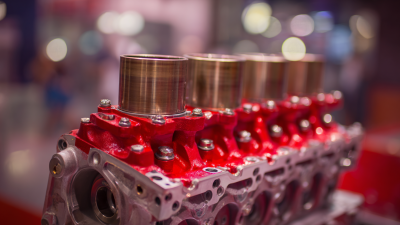
Liners sit inside the cylinder block, around each piston’s travel path. Dry liners contact the block closely, while wet liners touch coolant directly and usually use seals to prevent leaks. The right design depends on engine layout, cooling, and service needs. S&P Global Mobility reported that the average age of U.S. light vehicles reached 12.6 years in 2024. Long service life makes liner condition and correct installation important, though vehicle age alone cannot predict engine wear.
Tips: Check liner protrusion, bore wear, and sealing surfaces against the engine maker’s specifications. A clean-looking liner may still be out of tolerance; measurement is essential.
A cylinder liner, also called a cylinder sleeve, forms or renews the cylinder’s working surface. It guides the piston and rings, helps contain combustion pressure, and transfers heat to the engine block or cooling system. Exact dimensions and fit depend on the engine design.
| Liner type | Structure and coolant contact | Typical fit and sealing | Common applications | Engine placement and selection notes |
|---|---|---|---|---|
| Dry liner | A separate sleeve sits inside the block bore. Its outer surface is supported by the block and does not directly contact engine coolant. | Usually installed with an interference fit or another specified block fit. It generally does not need coolant seals at its lower end. | Many passenger-vehicle and light-duty engine designs, as well as some industrial engines. | Located within the cylinder-block bore. The block provides support and forms the coolant-jacket boundary. Confirm bore size, wall thickness, and required finished diameter. |
| Wet liner | The liner’s outside surface is directly exposed to engine coolant. It commonly has a thicker wall and a top flange or another locating feature. | Typically located at the top by a flange and sealed against coolant leakage with seals near the lower end. Seal arrangement varies by engine. | Common in many heavy-duty diesel, commercial-vehicle, and industrial engines designed for liner replacement. | Fits into the block with coolant surrounding part of its outer surface. Correct liner protrusion, sealing surfaces, and seal compatibility are critical to installation. |
| Flanged dry liner | A dry liner with an integral upper flange that provides a locating or retaining shoulder. Coolant does not directly contact the liner’s outside surface. | Fitted into the block bore according to the engine’s specified fit. The flange seats at the top of the block or counterbore. | Engine designs that use a dry sleeve and require a defined top locating surface or axial support. | Positioned in the block bore, with the flange at the deck end. Check flange thickness, counterbore condition, and specified liner height. |
| Thin-wall repair sleeve | A relatively thin replacement sleeve used to restore a worn or damaged cylinder bore. It is generally a dry sleeve, although repair procedures vary. | Installed in a prepared block bore using the fit and retention method specified for the repair. The sleeve is commonly finish-machined after installation. | Engine overhauls and cylinder-bore repairs where the block and manufacturer’s repair procedure permit sleeving. | Installed inside the original block bore. Suitability depends on remaining block material, sleeve dimensions, machining accuracy, and the engine’s repair limits. |
Buyer’s check: Before ordering, verify the engine model and configuration, liner type, bore and outside dimensions, flange details, material and surface treatment, seal requirements, and installation specifications. Do not assume liners with similar dimensions are interchangeable.
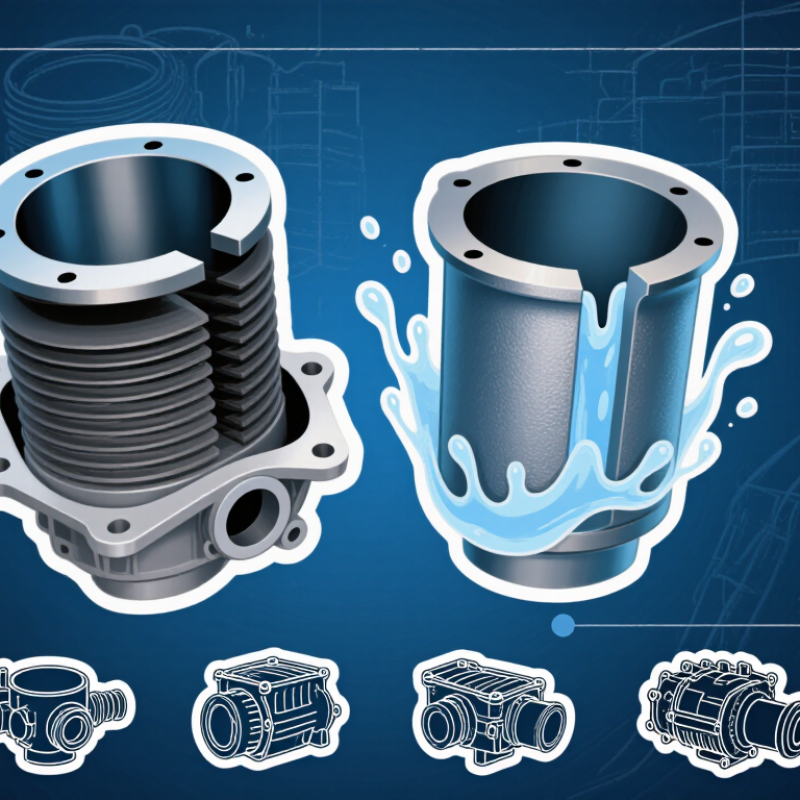
Dry, wet, and finned cylinder liners suit different cooling systems and service conditions. A dry liner sits inside the block, transferring heat through close contact with the surrounding metal. It keeps coolant away from the liner, but removal may require more workshop work. A wet liner directly contacts coolant and is often easier to replace. Its sealing rings need careful inspection; leaks can damage the engine. Finned designs add external surface area for air cooling, making airflow and clean fins especially important.
Selection depends on block design, operating load, cooling method, and maintenance access. The IEA’s Global Energy Review 2024 reports that energy-related carbon dioxide emissions reached 37.4 gigatonnes in 2023, up 1.1% from 2022. This is not liner-specific evidence, but it underlines why engine efficiency and service life matter. One trade-off is easy to miss: a simpler replacement can still mean poor performance if the liner does not match the cooling system.
Tips: Check the engine maker’s service specifications before ordering. Inspect liner seats, sealing grooves, and coolant passages. Measure bore wear; visual checks alone can miss it. Be cautious with “universal” fit claims.
Cylinder liner performance depends on more than nominal hardness. Gray cast iron is widely used because its graphite structure helps retain oil and damp vibration. Alloyed cast iron can improve strength and wear resistance, but the best choice depends on engine load, temperature, lubrication, and service conditions. There is no universal winner.
Manufacturing controls whether those material properties translate into reliable operation. Centrifugal casting can produce a relatively uniform liner wall, while careful heat treatment helps limit internal stress. After boring, honing creates a crosshatched surface that supports oil retention and piston-ring seating. Too rough, and wear may rise; too smooth, and oil retention can suffer. Small details matter.
Buyers should check dimensional tolerances, wall thickness, hardness consistency, and the finished bore’s surface quality. Ask how the liner was inspected, not only which alloy it uses. A polished surface can look reassuring, yet appearance alone says little about subsurface defects. Even experienced teams can overvalue hardness. It is worth comparing test data with the engine’s operating profile and confirming compatibility with the piston rings, cooling system, and installation method. One practical check is to measure the bore at several heights and directions; uneven readings may reveal distortion that a single measurement misses.
How material grade and manufacturing affect liner performance
ASTM A48 class numbers specify minimum tensile strength for gray iron test specimens: Class 20 through Class 40 correspond to 138–276 MPa. These are standardized material-grade values, not guaranteed measurements of finished cylinder liners. Casting method, section thickness, cooling, and quality control affect the properties achieved in a liner. Higher tensile strength alone does not determine liner performance; wear resistance, thermal behavior, and compatibility with the engine are also important.
Where Different Liner Types Are Used Across Engine Categories
Low-speed, two-stroke marine engines commonly use wet liners. Coolant surrounds the liner, helping control heat in engines that run for long periods under heavy loads.
UNCTAD’s Review of Maritime Transport 2024 reports that over 80% of global trade by volume moves by sea.
That scale makes liner availability and service planning important for vessel operators.
In passenger vehicles, dry liners are often used where a compact block design and stable bore support are priorities. Heavy-duty truck engines more often use wet liners, which can be replaced without changing the entire block. Smaller air-cooled engines may use finned liners to release heat directly to surrounding air.
Fit still decides. A liner’s cooling design must match the engine block.
Medium-speed marine engines and stationary generator sets commonly use wet liners, especially where long operating hours make in-frame replacement valuable. Flanged designs can help locate and seal a liner, but flange shape alone does not identify its cooling type.
Real fleets are messier than a chart.
Buyers should confirm bore dimensions, coolant passages, material, and honing requirements against the specific engine. A technically suitable liner can still fail early if installation clearances or surface finish are wrong.
In 2026, global buyers should compare cylinder liners by engine design, cooling layout, material, and service conditions—not price alone. Wet liners contact coolant directly, which can ease replacement but makes sealing and corrosion control critical. Dry liners fit tightly inside the block and depend more on block condition and machining accuracy. For high-load engines, alloyed cast iron may offer useful wear resistance; however, material labels alone do not predict service life.
A measurable starting point helps. ASTM A48/A48M classifies gray iron by tensile strength; Class 40 specifies a 40 ksi minimum. That figure is a material benchmark, not a guarantee of liner durability under heat, vibration, or poor lubrication. Ask suppliers for material certificates, dimensional tolerances, hardness results, and test methods. Then compare them against the engine maker’s specifications. I still see buyers focus too heavily on hardness. It matters, but bore finish and installation quality can undo a good material choice.
Tips: Match liner type to the original engine design. Check flange height, bore diameter, and coolant sealing details. Request traceable test records, not just a catalogue claim. Recheck the specification before ordering; small measurement differences can become expensive.