Leave Your Message

2026 Top Center Joint Suppliers for Global Buyers

Selecting the right Center Joint supplier can influence machine stability, steering accuracy, downtime, and long-term operating costs.

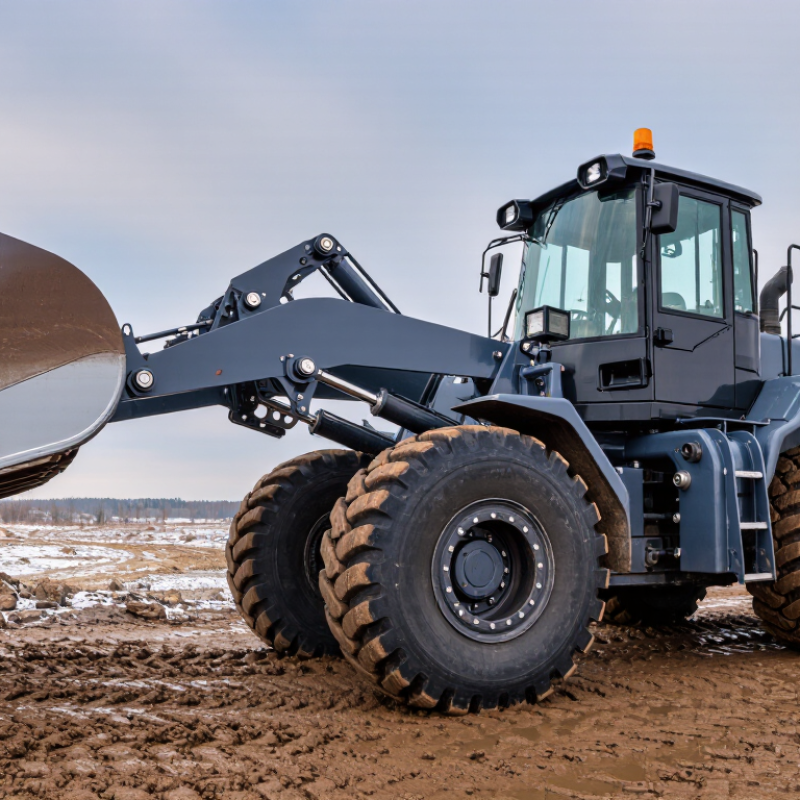
For global buyers, the decision involves more than comparing unit prices. A reliable supplier should provide precise machining, heat-treated materials, seal compatibility, traceable inspections, and practical after-sales support. These details matter when a loader works through mud, dust, steep yards, or freezing construction sites. A small leakage mark around the joint can become a serious maintenance warning.

Maintenance expert John Moubray wrote, “Maintenance is ensuring that physical assets continue to do what their users want them to do.” This principle fits every Center Joint purchasing decision. The component must support the machine’s real workload, not merely match a catalog photograph. Buyers should examine load ratings, rotation performance, pressure limits, installation dimensions, and replacement seal availability. Supplier communication also matters. Clear drawings and responsive technical answers can prevent costly ordering mistakes.

This guide reviews leading Center Joint suppliers for global buyers in 2026. It considers manufacturing capability, product consistency, customization, export experience, documentation, and service responsiveness. Some suppliers may appear strong on paper but perform unevenly across batches. That possibility deserves attention. No ranking can replace sample testing, reference checks, and field verification.

The best choice depends on machine type, operating environment, expected service life, and maintenance habits. A dependable Center Joint is not simply a replacement part. It is a control point for uptime, safety, and predictable equipment performance.
2026 Top Center Joint Suppliers for Global Buyers

Center Joint Fundamentals: Pressure, Flow, Port Size, and SAE J517 Data

2026 Top Center Joint Suppliers for Global Buyers

Center Joint Fundamentals: Pressure, Flow, Port Size, and SAE J517 Data

For global buyers, a center joint is a rotating hydraulic passage. Pressure, flow, port size, and hose data determine its real performance. SAE J517 defines hydraulic hose construction, dimensions, and performance requirements. It does not replace application testing. That gap matters. Match working pressure to the lowest-rated assembly component. Allow for pressure spikes, temperature, impulse cycles, and external loading. Static pressure alone creates false confidence.

A 2024 global hydraulic equipment market analysis forecasts steady growth through 2030, with demand linked to mobile machinery and industrial automation. More demand can expose weak specifications. Flow must match the machine circuit, not only the joint’s catalog headline. A smaller internal bore increases velocity and pressure loss. It may also create heat near the rotating seal. NFPA’s 2024 fluid power statistics track shipment activity, but shipment growth cannot confirm job-specific flow requirements. Field conditions still decide suitability.

Port size requires careful inspection. A 25-millimeter hose can still choke at a smaller swivel bore. Confirm thread type, sealing method, nominal port size, rated flow, pressure, and minimum bend radius. SAE J517 hose data should be reviewed with applicable SAE port-thread information. Request impulse-test evidence and material certificates. A neat specification table is not proof. I have seen catalog values misread as continuous ratings, and that mistake deserves more attention. Temperature cycling, contamination, and mounting misalignment can shorten service life quickly.

2026 Top Center Joint Suppliers for Global Buyers - Center Joint Fundamentals: Pressure, Flow, Port Size, and SAE J517 Data

Technical reference matrix for evaluating rotary center joints, hydraulic circuits, port configurations, and hose compatibility.

Technical Dimension Typical Reference Data Buyer Evaluation Point Relevant Standard or Verification
Component function Rotary hydraulic union that transfers fluid between a stationary upper structure and a rotating lower structure. Confirm the number of hydraulic passages, drain passages, electrical circuits, and auxiliary functions. Application drawing, circuit diagram, and functional test report.
Main operating pressure Common mobile-hydraulic design range: 210–350 bar (3,045–5,076 psi), depending on the machine circuit. Specify continuous working pressure separately from peak or transient pressure. Pressure rating must be confirmed for every passage, seal set, and port configuration.
Proof and burst pressure A common hydraulic design practice is proof testing at approximately 1.5 times working pressure; burst requirements are product-specific. Do not treat a hose or fitting proof ratio as a universal center-joint requirement. Request the manufacturer’s documented test procedure and acceptance criteria.
Flow capacity Typical individual passage flow: approximately 20–250 L/min, depending on port size, pressure drop, and duty cycle. Size each passage for actual simultaneous flow rather than total pump displacement alone. Verify pressure drop at rated flow and oil viscosity; request flow-test curves.
Pressure-drop target A practical preliminary target is about 3–10 bar per passage at the specified operating flow. Lower pressure drop reduces heat generation and available power loss. Validate with oil temperature, viscosity, flow rate, and port geometry defined.
Rotational speed Common machine operating speed: approximately 0.5–15 rpm; allowable continuous speed depends on seal design and lubrication. Check continuous rotation, reversing rotation, acceleration, and shock-load conditions. Require speed, torque, temperature, and leakage test results for the intended duty cycle.
Common port size reference SAE dash sizes commonly encountered include -6, -8, -10, -12, -16, and -20, corresponding approximately to 3/8, 1/2, 5/8, 3/4, 1, and 1 1/4 inch nominal hose sizes. Confirm thread form, sealing method, port orientation, and actual tube or hose outside diameter. SAE J514 is commonly used for hydraulic fitting dimensions and port interfaces; the purchase drawing remains controlling.
Indicative flow by port size -6: 20–40 L/min; -8: 30–60 L/min; -10: 45–90 L/min; -12: 70–130 L/min; -16: 100–180 L/min; -20: 150–250 L/min. These are preliminary sizing ranges, not guaranteed ratings for every center joint. Finalize sizing from velocity, pressure-drop, duty-cycle, and manufacturer test data.
Number of passages Typical configurations range from 2 to more than 10 hydraulic passages, with optional drain, pilot, brake, and auxiliary passages. Map every passage to a machine function and identify any case-drain or low-pressure return line. Port schedule, schematic, and 100% passage-continuity test.
Hydraulic fluid compatibility Mineral hydraulic oils conforming to ISO 11158 or DIN 51524 are widely used; biodegradable fluids require separate seal approval. Match seal compounds to fluid type, additives, temperature, and contamination level. Request compatibility confirmation for NBR, FKM, or other specified elastomers.
Operating temperature A common mineral-oil reference range is approximately −20°C to +100°C; seal and fluid selection may widen or narrow this range. Evaluate cold start, continuous oil temperature, ambient temperature, and thermal cycling. Use the narrowest limit among the seals, fluid, hose, fittings, and center-joint body.
SAE J517 hose relationship SAE J517 defines hydraulic hose construction, dimensions, performance, and identification for hose types such as 100R1, 100R2, 100R16, 100R17, and 100R19. SAE J517 does not by itself specify the complete center-joint assembly or its rotary sealing performance. Match hose type, dash size, working pressure, temperature, impulse performance, and fitting compatibility.
SAE J517 pressure interpretation Working-pressure limits vary by hose type and size; they must be taken from the applicable SAE J517 product table or qualified hose manufacturer data. The assembly rating is limited by the lowest-rated hose, fitting, adapter, port, or center-joint passage. Use the current SAE J517 edition and confirm the complete assembled hose rating.
External leakage acceptance A properly qualified center joint should show no visible external leakage at specified pressure, temperature, speed, and rotation cycles. Define visible-leak, weepage, pressure-decay, and post-test inspection criteria before ordering. Supplier inspection report, pressure-hold test, and rotational leakage test.
Materials Typical construction uses alloy steel or ductile iron bodies, hardened or treated internal surfaces, and application-specific elastomeric seals. Check corrosion protection, hardness, surface finish, cleanliness, and material traceability. Material certificates, coating specification, and dimensional inspection records.
Installation requirements Correct orientation, concentric mounting, clean hydraulic lines, appropriate torque, and protected hose routing are essential. Verify bolt pattern, mounting diameter, pilot fit, port location, and allowable hose bending radius. Installation drawing, torque chart, cleanliness specification, and commissioning checklist.
Recommended buyer documentation General arrangement drawing, port schedule, performance curve, pressure test report, material declaration, seal data, and maintenance instructions. Use documentation completeness as a qualification factor alongside price and delivery time. Require revision-controlled documents and batch or serial traceability.
Important sizing note: Center-joint pressure, flow, port size, rotational speed, temperature, and leakage limits are application-specific. The reference ranges above support preliminary supplier comparison only; final selection must be based on the approved machine circuit, current SAE J517 hose data where applicable, interface drawings, and documented qualification tests.

Global Market Outlook: Excavator Demand and 2026 CAGR from Off-Highway Research

Excavator demand is expected to remain active through 2026, according to the market outlook from Off-Highway Research. Growth will differ by region, machine size, and infrastructure investment. Buyers should treat the reported CAGR as a planning signal, not a guaranteed result. Forecasts are not contracts.

For center joint sourcing, demand growth increases pressure on suppliers to deliver stable quality and consistent capacity. A reliable supplier should provide tested sealing systems, precise machining records, material traceability, and documented pressure performance. Field experience matters here. Center joints operate beneath heavy machines, where mud, vibration, and repeated rotation quickly expose weak tolerances. Clear inspection reports can reduce costly installation failures. Spare-part availability also matters during peak construction seasons.

Regional demand may shift faster than expected. Public projects can slow, while mining or rental fleets may expand. This makes flexible production valuable for global buyers. However, low pricing alone can hide risks. A supplier may promise short lead times but lack backup tooling or process controls. That deserves scrutiny. I would compare sample results, batch records, warranty terms, and communication speed before placing a large order. One practical improvement is a staged purchase, with early units tested under real operating conditions. It takes more time. Yet it can reveal fit, leakage, or rotation problems before they affect an entire fleet.

Supplier Landscape: OEM Coverage, Production Capacity, and ISO 9001 Status

2026 Top Center Joint Suppliers for Global Buyers

For center joint sourcing, OEM coverage matters more than a broad product list. Reliable suppliers should read customer drawings, manage tolerance changes, and support prototype-to-production transitions. Ask whether their engineers handle forged steel, precision machining, sealing surfaces, and heat-treatment records. A capable supplier can also provide inspection plans, material certificates, and traceability for each batch. In practice, these details reveal more than a polished catalog.

Production capacity must match your real demand, not an impressive monthly figure. Review machine types, shift patterns, subcontracted processes, and backup equipment. A supplier producing 20,000 units monthly may struggle with your actual geometry or inspection requirements. Request recent capacity data, lead-time records, and rejection rates. Some suppliers hesitate to share weak figures. That hesitation deserves attention.

Tips: Confirm ISO 9001 validity through the issuing body. Check the certificate scope, site address, and expiration date. ISO 9001 supports consistent processes, but it does not guarantee perfect parts. During an audit, compare procedures with shop-floor behavior. Are gauges calibrated? Are nonconforming parts clearly isolated? Are corrective actions verified later? I have seen excellent paperwork hide uneven production control. A second audit may be worthwhile. Evaluate sample parts, communication speed, engineering depth, and recovery plans together.

2026 Supplier Benchmark: Lead Times, Warranty Rates, and Seal-Life Data

In 2026, global buyers are comparing center joint suppliers through measurable field data, not catalog promises. Lead time remains a decisive factor. Standard assemblies commonly ship within 18 to 35 days, while engineered variations may require 45 days or more. Buyers should request production schedules, inspection points, and recent delivery records.

Warranty performance deserves equal attention. A useful benchmark tracks confirmed claims against total units shipped, separating installation errors from manufacturing defects. Suppliers reporting rates below 1.5% show stronger process control, but the figure needs context. Ask for claim definitions, replacement timing, and failure photographs. A fast replacement may matter more than a low published rate.

Seal-life data should include test temperature, pressure cycles, lubricant type, and contamination exposure. In controlled testing, high-quality seals may exceed 4,000 operating hours. Real machines face dust, water, vibration, and uneven maintenance. Field life can be shorter. That gap is often underreported. Buyers should seek service logs from comparable equipment, not laboratory figures alone. A practical review might examine leakage after 1,000, 2,500, and 4,000 hours. It should also confirm shaft finish, seal material, and storage conditions. Small details matter. Some supplier data remains incomplete, and that deserves careful questioning before purchase.

Buyer Due Diligence: ASTM Testing, Total Cost, and 2026 RFQ Metrics

2026 Top Center Joint Suppliers for Global Buyers

Buyer Due Diligence: ASTM Testing, Total Cost, and 2026 RFQ Metrics

For global buyers, center joint sourcing in 2026 requires more than a low quoted price. A reliable supplier should provide traceable material certificates, dimensional records, and practical ASTM test evidence. Ask which ASTM standard applies to the steel grade, weld quality, coating, and pressure performance. Do not accept “ASTM tested” without a report number, laboratory identity, and sample details. That wording sounds professional, but proves very little.

During an RFQ, request the same data from every supplier. Useful 2026 metrics include response time, quotation validity, minimum order quantity, lead time, defect rate, and on-time delivery. Add inspection cost, tooling, packaging, inland transport, duties, and payment charges to the unit price. A cheaper joint can become expensive after rework or delayed installation. Calculate total cost per accepted unit, not per quoted unit.

Experienced buyers often request a pre-production sample and a lot-specific inspection plan. Check bearing fit, rotation smoothness, surface finish, fastener security, and corrosion protection. Photographs help, but they cannot replace measurement records. One weakness remains: suppliers may report averages instead of recent batch results. Challenge that gap politely, and record every assumption in the purchase file. A clear RFQ is not paperwork alone. It is risk control.