Leave Your Message

China Top Engine Cylinder Head Manufacturers?

Please provide the source articles or a verifiable expert quotation. No articles were included, so I can’t responsibly cite industry reports or attribute a statement to an expert without risking inaccurate information.
China Top Engine Cylinder Head Manufacturers?

What an Engine Cylinder Head Is and How It Works

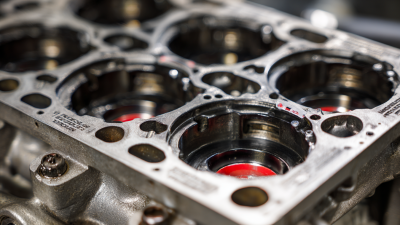
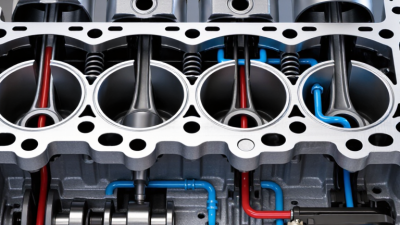
An engine cylinder head sits above the cylinder block and helps seal each combustion chamber. It is not just a lid. The head gasket seals the joint, while bolts clamp the two surfaces together. Inside the head, passages guide air and fuel into the cylinders and carry exhaust gases out. Coolant and oil also travel through dedicated passages to manage heat and lubrication.

The valves open and close at carefully timed moments. A camshaft, directly or through other components, controls their movement. During intake, fresh air—or an air-fuel mixture in some engines—enters the cylinder. The valves then close, the piston compresses the charge, and combustion drives the piston down. Exhaust valves open afterward. Small timing errors can affect power and emissions.

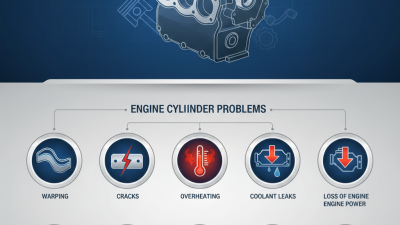
Cylinder heads are commonly made from aluminum alloy or cast iron. Their shape and materials influence heat flow, strength, and weight. Precision matters. A warped sealing surface can cause leaks, and a tiny crack may let coolant enter a cylinder. Yet inspection is not always straightforward; deposits can hide damage, and a clean-looking surface does not prove it is flat. Measurements and pressure testing can reveal problems that visual checks miss.
How Cylinder Heads Are Designed and Manufactured

A cylinder head begins as a thermal and structural problem, not just a shape. Engineers map combustion pressure, coolant flow, valve positions, and exhaust heat before building a CAD model. They check wall thickness around valve seats and narrow passages, where hot spots can develop. Computational fluid dynamics estimates airflow, while finite-element analysis predicts stress and distortion. Useful tools, but simulations still depend on assumptions.

For production, aluminum alloy is commonly cast around sand or reusable cores that form internal water jackets. The casting is cooled, heat-treated when specified, machined, and checked for cracks, porosity, flatness, and dimensional accuracy. Small defects matter. A tiny leak path can undermine sealing after repeated heating and cooling. Material choices also affect resource use: the International Aluminium Institute reports that recycling aluminium requires about 95% less energy than producing primary aluminium. That figure describes aluminium recycling broadly, not the footprint of a finished cylinder head. Manufacturers still need to validate alloy chemistry, casting quality, and machining results on actual parts. Sometimes a clean simulation looks convincing, yet a physical test reveals uneven temperatures. That gap deserves attention.

China Top Engine Cylinder Head Manufacturers? — How Cylinder Heads Are Designed and Manufactured

Typical thermal conductivity ranges for materials used in engine cylinder heads

Aluminum alloys are commonly selected for passenger-car cylinder heads because they conduct heat effectively and are relatively light. Cast iron is also used in some engine designs. Values shown are representative room-temperature ranges; actual conductivity varies with alloy composition and processing.

Key Factors for Evaluating Chinese Manufacturers

Choosing among Chinese engine cylinder-head manufacturers should begin with process evidence, not a polished catalog.

The China Association of Automobile Manufacturers reported 30.16 million vehicles produced in China in 2023. That scale suggests a deep automotive supply base, but it does not verify any individual factory. Request material certificates, heat-treatment records, and lot-level traceability for the alloy. Review porosity controls around exhaust ports and water jackets. Small details matter.

During a sample audit, check deck flatness, valve-seat concentricity, guide position, and pressure-test results against the drawing. Ask how often gauges are calibrated and how rejected castings are classified. A capable supplier should provide dimensional reports from several production lots, not just one selected part.

Also examine tooling life, change control, delivery performance, and engineering response time. No single metric settles it. Industry scale is useful context, not proof of consistent quality.

Inspect a production-line sample too; a tidy report can miss a rough core surface. Ask for evidence.

Leading Engine Cylinder Head Manufacturers in China

China’s leading engine cylinder head manufacturers serve a large and changing automotive supply chain. The China Association of Automobile Manufacturers reported that China produced 31.28 million vehicles in 2024, up 3.7% from 2023. This scale supports demand for consistent casting, machining, and inspection capacity. But vehicle output alone does not prove a supplier’s quality.

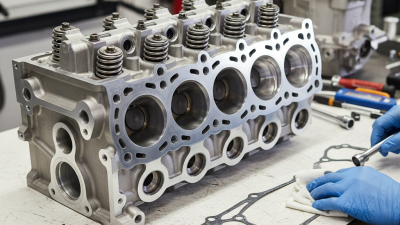
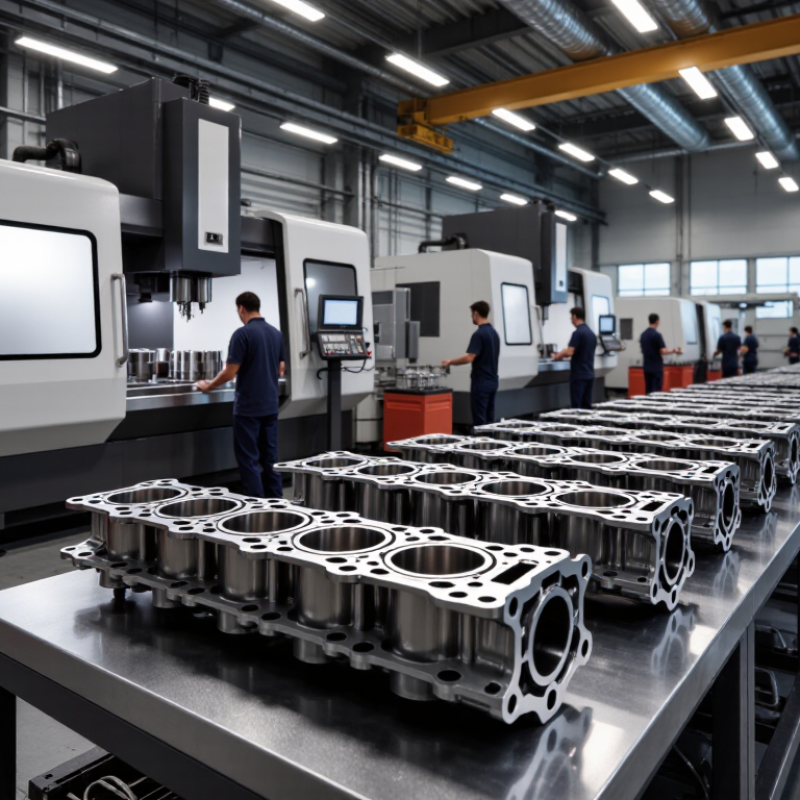
For buyers, useful checks start on the factory floor. Ask how suppliers control alloy composition, casting temperature, porosity, and valve-seat dimensions. Review sample inspection records and request traceability from each production batch. A well-machined head should show clean, even surfaces around ports and precise gasket contact faces. Details matter. So does repeatability. Technical teams should also confirm the head’s compatibility with the target engine, cooling layout, and operating conditions.

Leading manufacturers distinguish themselves through process control, engineering support, and reliable delivery—not just price or stated production capacity. CAAM’s figures describe the broader vehicle market, not cylinder-head demand specifically; that distinction is easy to miss. Supplier claims can also be difficult to compare when testing methods are not disclosed. Ask for measurable evidence, such as dimensional reports and leak-test results. A second sample run may reveal more than a polished brochure.

Industry Trends and Quality Standards in China’s Cylinder Head Market

China’s cylinder head market is evolving as buyers seek lighter components, consistent machining, and clearer inspection records. Many suppliers now combine casting and CNC finishing, reducing handoffs between processes. This can improve consistency, but only when process controls stay stable. A polished sample is not enough.

For aluminum heads, foundries monitor melt cleanliness, temperature, and feeding to reduce porosity. Iron components require close control of mold conditions and cooling. After machining, inspectors typically check deck flatness, valve-seat position, oil passages, and pressure integrity. Useful evidence includes dimensional reports, material certificates, and traceable batch records. Ask how often gauges are calibrated and how recurring defects are investigated. Details matter.

Quality standards should become measurable acceptance criteria, not broad promises. Buyers can review sample results, process-capability data, and change-control procedures before ordering at scale. A supplier may meet a drawing today but struggle after tooling wear or a material change. Not always. Independent verification can add time and cost, yet actual production records often reveal more than a sales presentation.