
Leave Your Message

Top 10 Electric Pump Types for Global Buyers

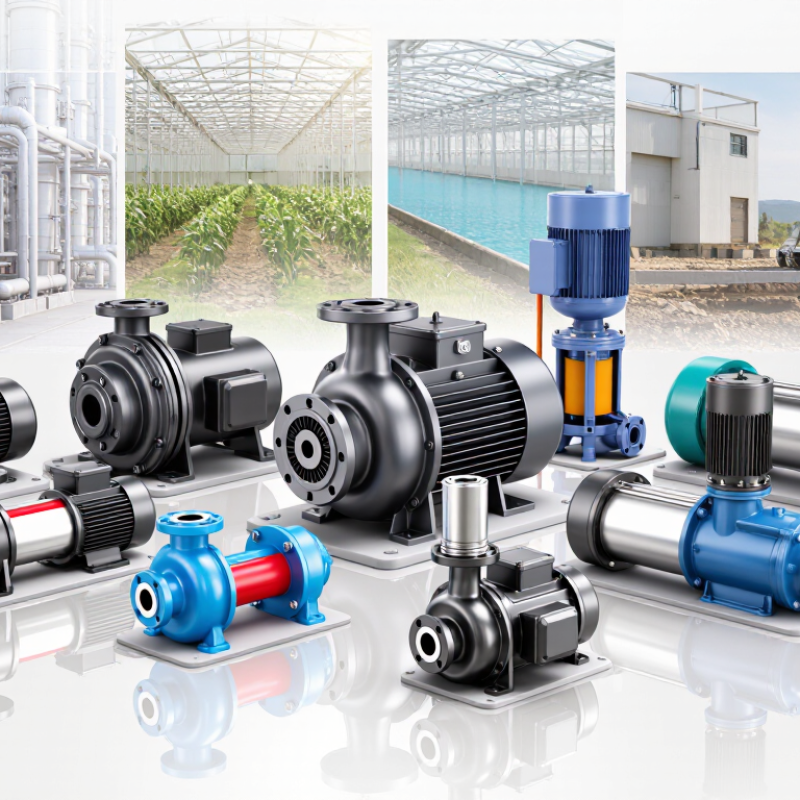
Choosing the right Electric Pump can shape an entire fluid-handling system. It affects energy use, maintenance, noise, and production reliability. Global buyers face many options, including centrifugal, diaphragm, gear, screw, piston, peristaltic, submersible, and magnetic-drive pumps. Each design solves a different problem.

Pump reliability specialist Dr. Lev Nelik offers a useful reminder: “A pump does not operate alone; it operates within a system.” That principle matters in real installations. A chemical plant may need corrosion resistance and leak prevention. A farm may prioritize flow stability and easy cleaning. A building manager may focus on pressure control and quiet operation. Meanwhile, a mining site may demand abrasion-resistant materials and dependable sealing.

This guide examines the top 10 Electric Pump types for international buyers. It considers operating principles, typical applications, energy performance, materials, control methods, and maintenance demands. It also highlights practical purchasing details, such as voltage compatibility, spare-part availability, certification, and after-sales support. A stainless-steel pump may perform well in a clean-water application, yet fail quickly with abrasive slurry. A low-cost model may also become expensive after repeated seal replacements.

No ranking is perfect. Conditions differ between countries, industries, and job sites. Product data can also appear clearer than field performance. Buyers should verify flow rate, total head, fluid temperature, viscosity, and duty cycle before ordering. The strongest choice is rarely the most powerful pump. It is the one that fits the system, remains serviceable, and performs consistently under real working conditions.
Top 10 Electric Pump Types for Global Buyers

Electric Pump Fundamentals: Power Sources, Flow, Pressure, and Applications

Top 10 Electric Pump Types for Global Buyers

Electric pump selection starts with the power source. Alternating-current pumps suit fixed industrial systems, while direct-current models fit vehicles, batteries, and solar installations. Single-phase power works for smaller loads. Three-phase power usually supports larger motors and steadier operation. The International Energy Agency reports that motor-driven systems consume about 43–46% of global electricity. Pump efficiency deserves serious attention.

Flow measures delivered volume, such as liters per minute. Pressure describes the force needed to move that volume. Buyers should also check total dynamic head, friction losses, fluid temperature, and viscosity. A pump may show impressive flow on paper, yet perform poorly through narrow pipes and sharp bends. The U.S. Department of Energy notes that pumping systems can represent 25–50% of industrial electricity use. This makes correct sizing financially important. A neat formula can still mislead.

Tips: Match the pump curve with the real duty point. Confirm voltage, frequency, head, and flow before ordering. For water systems, record pipe length and elevation changes. For chemical or abrasive fluids, verify material compatibility. I often recommend measuring actual conditions instead of trusting old specifications. Field data may be incomplete, but assumptions are riskier. References: International Energy Agency, Energy-Efficiency Policy Opportunities for Electric Motor-Driven Systems; U.S. Department of Energy, Improving Pumping System Performance: A Sourcebook for Industry.
The 10 Main Electric Pump Types Used in Global Markets

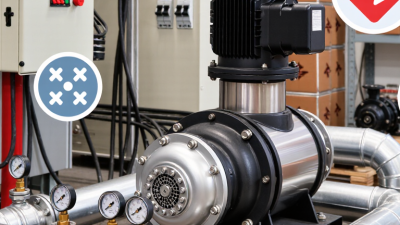
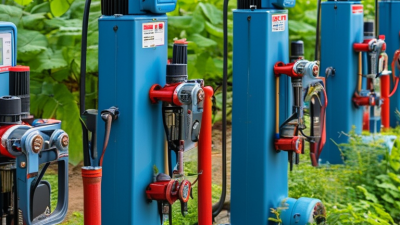
The ten main electric pump types used in global markets serve different flow, pressure, and fluid conditions. Centrifugal pumps handle clean water, cooling circuits, and general process transfer. Submersible pumps operate underwater in drainage, sewage, and deep wells. Diaphragm pumps suit corrosive fluids and metered dosing. Gear pumps deliver steady flow for oils and viscous liquids. Screw pumps manage thick fluids with low pulsation. Piston and plunger pumps generate high pressure for cleaning, injection, and hydraulic service. Peristaltic pumps protect sensitive fluids inside flexible tubing. Axial-flow pumps move very large volumes at low head. Mixed-flow pumps balance volume and moderate lift. Magnetic-drive pumps reduce shaft-seal leakage in demanding chemical service.

Selection requires more than comparing motor power. The U.S. Department of Energy reports that pumping systems may consume 25% to 50% of electricity in some industrial facilities. Oversized centrifugal units often waste energy through throttling. Variable-speed control can help, but only when system demand changes. For abrasive slurry, a standard impeller may wear quickly. For a dry-running installation, a submersible design may fail early.

Field experience also exposes a weakness in simple rankings. The “best” pump depends on viscosity, solids, temperature, duty cycle, and maintenance skill. The Hydraulic Institute’s technical guidance emphasizes matching pump selection with the system curve. Buyers should verify rated flow, total dynamic head, efficiency, seal materials, ingress protection, and local power frequency. A small efficiency gain can matter greatly in continuous operation. Yet low purchase cost can hide higher lifetime energy and service expenses.

Top 10 Electric Pump Types for Global Buyers - The 10 Main Electric Pump Types Used in Global Markets

Electric Pump Type Operating Principle Typical Flow Range Typical Pressure or Head Suitable Fluids Common Global Applications Key Advantages and Selection Notes
End-Suction Centrifugal Pump Uses a rotating impeller to convert motor energy into fluid velocity and pressure. Flow changes with system resistance. 1–2,000 m³/h 5–150 m head Clean water, treated water, light industrial liquids, mildly contaminated fluids Water supply, irrigation, HVAC systems, general industrial transfer, fire-water systems Widely available, simple construction, and economical for continuous flow. Requires adequate suction conditions and is generally not ideal for highly viscous liquids.
Multistage Centrifugal Pump Uses two or more impellers arranged in series so that pressure increases across multiple stages. 0.5–500 m³/h 50–1,000 m head Clean or lightly treated water and low-viscosity liquids Boiler feed, reverse-osmosis pre-treatment, high-rise water supply, pressure boosting, industrial washing Provides high pressure with relatively compact dimensions. Performance can be affected by abrasive solids, poor water quality, or dry running.
Submersible Pump The motor and pump are sealed and immersed directly in the pumped liquid, eliminating the need for a long suction lift. 1–3,000 m³/h 5–200 m head Drainage water, sewage, wastewater, groundwater, slurry depending on impeller design Construction dewatering, municipal wastewater, mining drainage, flood control, wells and boreholes Quiet operation and effective flooding resistance. Motor cooling depends on the surrounding liquid, and cable sealing and corrosion protection are important.
Self-Priming Centrifugal Pump Uses an internal liquid reservoir and air-separation process to remove air from the suction line during startup. 2–1,000 m³/h 5–100 m head Water, drainage liquids, wastewater, liquids containing limited entrained air Mobile dewatering, wastewater transfer, agriculture, construction sites, general utility service Can restart without manual priming after the casing is initially filled. Suction lift, solids size, and air content must remain within the design limits.
Gear Pump Meshing gears trap liquid between the gear teeth and casing, producing a controlled positive-displacement flow. 0.01–300 m³/h Up to 250 bar Oils, fuels, lubricants, polymers, resins, and other clean viscous liquids Fuel transfer, lubrication systems, chemical dosing, hydraulic equipment, process-fluid circulation Compact, reliable, and suitable for viscous liquids. It requires a pressure-relief arrangement and may be damaged by abrasive solids or dry running.
Twin-Screw Pump Two intermeshing screws convey liquid smoothly along the pump chamber with low pulsation. 1–1,500 m³/h Up to 100 bar Viscous liquids, oils, emulsions, multiphase fluids, liquids containing limited solids Food processing, oil and gas transfer, marine loading, chemical processing, hygienic liquid handling Handles a broad viscosity range and can often tolerate gas entrainment. It normally costs more than basic centrifugal pumps and requires accurate clearances.
Diaphragm Metering Pump A motor-driven diaphragm reciprocates to draw in and discharge a precisely measured volume through check valves. 0.001–10 m³/h Up to 400 bar Corrosive chemicals, disinfectants, acids, alkalis, slurries, and low-flow process fluids Water treatment, chemical dosing, boiler treatment, process control, environmental systems Excellent dosing accuracy and strong leakage isolation. Pulsation dampeners may be needed, and diaphragm compatibility must match the chemical being pumped.
Peristaltic Hose Pump Motor-driven rollers compress a flexible hose or tube and move the liquid without direct contact with internal mechanical seals. 0.001–100 m³/h Up to 15 bar Abrasive slurries, corrosive chemicals, sludge, pigments, suspensions, and shear-sensitive fluids Mining, wastewater treatment, printing, ceramics, chemical dosing, food and pharmaceutical processing Handles abrasive and solids-laden fluids with good containment. Hose life depends on pressure, temperature, chemical compatibility, and operating speed.
Progressive Cavity Pump A helical rotor turns inside an elastomeric stator, creating sealed cavities that move liquid at a nearly constant rate. 0.1–500 m³/h Up to 60 bar Sludge, wastewater, polymers, oils, food products, high-solids and shear-sensitive liquids Municipal sludge handling, biogas plants, food processing, pulp and paper, chemical production Provides low-pulsation flow and handles high viscosity and solids well. Dry running can rapidly damage the stator, so dry-run protection is important.
Axial-Flow or Mixed-Flow Pump An impeller moves a large volume of liquid mainly parallel to the shaft in axial-flow designs, or partly radial and partly axial in mixed-flow designs. 500–100,000+ m³/h 1–40 m head Clean water, lightly screened wastewater, cooling water, irrigation water Flood control, drainage stations, irrigation, cooling-water circulation, water-level management Highly efficient for very large flow and low head. It is unsuitable for high-pressure service and may require careful protection from debris and cavitation.
Operating ranges are representative industry ranges rather than universal limits. Actual performance depends on pump size, motor speed, fluid temperature and viscosity, solids content, installation conditions, and system design.

How Each Electric Pump Type Works and Where It Performs Best

Top 10 Electric Pump Types for Global Buyers

Electric pumps suit different fluids, pressures, and installation conditions. A centrifugal pump spins an impeller, converting motor energy into continuous flow. It performs well in clean water, irrigation, and building circulation systems. A submersible pump operates underwater, using a sealed motor to lift drainage or groundwater. It saves space but needs careful cable protection.

A diaphragm pump moves fluid by flexing a membrane and opening check valves. This design handles chemicals, slurries, and metered dosing with limited leakage risk. A gear pump traps liquid between rotating gears, making it useful for oils, fuels, and viscous fluids. Check viscosity. A piston pump uses reciprocating motion to create high pressure, often for washing, testing, or precise dosing. A peristaltic pump squeezes flexible tubing, keeping the fluid away from moving parts. It works well with sensitive, abrasive, or sterile liquids.

A screw pump transports fluid along rotating screw cavities, providing steady flow for thick liquids and wastewater. A vane pump uses sliding vanes to create changing chambers, supporting moderate-pressure oil transfer. An axial-flow pump pushes liquid parallel to its shaft, making it effective for high-volume, low-lift drainage. A regenerative turbine pump repeatedly circulates liquid around an impeller, producing relatively high pressure from a compact unit. Quiet, but not universal. Global buyers should verify voltage, frequency, materials, seals, efficiency, and local safety requirements. Field experience shows that many failures begin with poor sizing, not poor equipment. Flow may look adequate during testing, yet collapse when pipe length, temperature, or fluid density changes. Recheck those assumptions.

Comparing Pump Efficiency, Materials, Maintenance, and Operating Costs

Top 10 Electric Pump Types for Global Buyers

Comparing Pump Efficiency, Materials, Maintenance, and Operating Costs

Electric pump selection should begin with duty conditions, not catalog efficiency. Centrifugal pumps suit steady, clean-water flows, while positive-displacement, gear, screw, piston, and diaphragm pumps handle viscous or metered fluids. Submersible and axial-flow pumps can reduce installation complexity, but access for repairs may become difficult. Peristaltic pumps protect sensitive fluids, although tubing replacement increases maintenance frequency. Vortex pumps tolerate solids, often sacrificing hydraulic efficiency.

Energy deserves serious attention. The U.S. Department of Energy reports that pumping systems may consume 25–50% of industrial facility electricity. The International Energy Agency also estimates motor-driven systems use about 53% of global electricity. Variable-speed control can reduce throttling losses, yet savings depend on the operating profile. A poorly sized pump still wastes power. Real sites are less predictable.

Material choice changes service life. Stainless steel resists many corrosive liquids, while cast iron remains economical for suitable water applications. Chemical compatibility must include seals, elastomers, temperature, and concentration. The Hydraulic Institute recommends evaluating the complete system, including pipes, valves, controls, and suction conditions. Maintenance records should track vibration, leakage, bearing temperature, and current draw. These details reveal problems earlier than annual inspections. Operating cost calculations should include electricity, spare parts, downtime, labor, and disposal. An efficient pump with fragile components may cost more over five years. That is an uncomfortable possibility.

A Global Buyer’s Guide to Selecting the Right Electric Pump

Choosing among electric pump types starts with the duty point, not the product label. Centrifugal pumps suit clean liquids and steady flow. Diaphragm pumps handle dosing and some abrasive fluids. Gear pumps support thicker liquids, while peristaltic pumps protect sensitive fluids from contamination. Submersible pumps work well in drainage pits, tanks, and flood-control systems.

Global buyers should record flow rate, head pressure, liquid temperature, viscosity, and solid content. A pump rated for 50 Hz may not perform correctly on a 60 Hz supply. Check voltage, motor protection, insulation class, enclosure rating, and local certification requirements. Materials also matter. Stainless steel can resist many corrosive liquids, but it is not a universal solution. Seal compatibility deserves careful attention.

A reliable selection process compares the operating point with the pump curve. Avoid choosing by maximum flow alone. That figure often assumes ideal conditions. Ask for tested efficiency, noise data, spare-part availability, and maintenance intervals. In practical installations, poor pipe sizing can waste more energy than the pump itself. A short suction line helps. So does proper alignment.

I would also challenge the first specification. Is the liquid really clean? Will demand change by season? Can operators service the unit safely? These questions expose weak assumptions. No selection is perfect. A cheaper pump may become expensive after repeated seal failures, downtime, or difficult repairs. Keep those risks visible before approving the purchase.