How to Choose the Best Electric Pump for Your Needs?
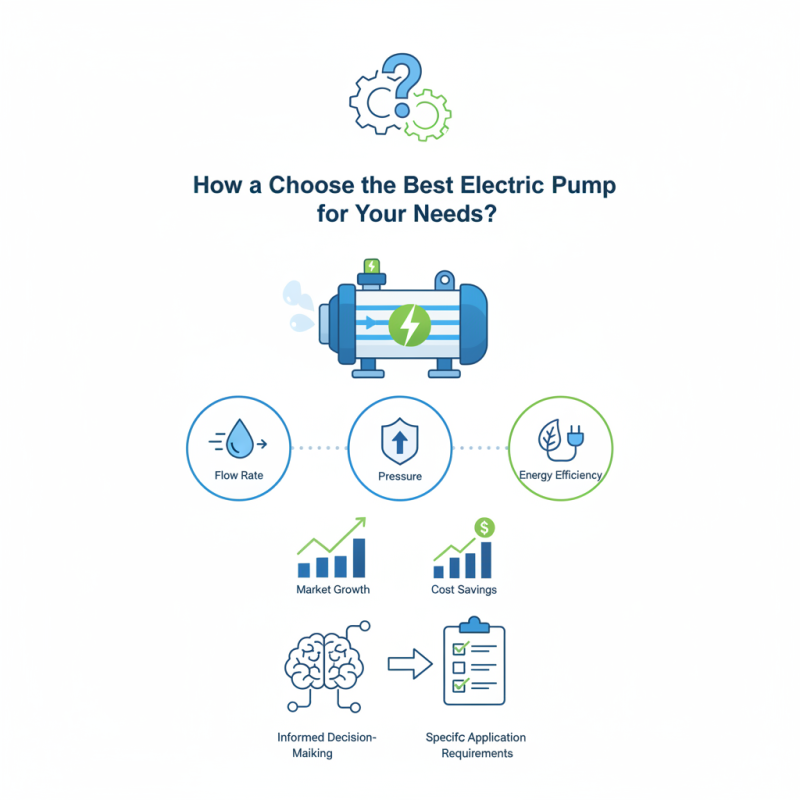
Choosing the right electric pump can be a daunting task. The variety of options available may confuse users. According to a report by Grand View Research, the global electric pump market is expected to reach $49.59 billion by 2025, growing significantly due to industrial demands. This surge emphasizes the importance of informed decision-making when selecting an electric pump.
Industry expert Dr. John Stevens notes, “Selecting the right electric pump is crucial for efficiency and longevity.” His insight highlights the need for understanding specific application requirements. It’s essential to consider factors such as flow rate, pressure, and energy efficiency.
In a rapidly evolving market, consumers often overlook crucial details. A well-chosen electric pump can save time and resources. Yet, many users struggle with the array of features and specifications. Taking the time to evaluate options thoroughly is vital. Acknowledging this complexity can lead to better decisions.
Understanding the Different Types of Electric Pumps Available
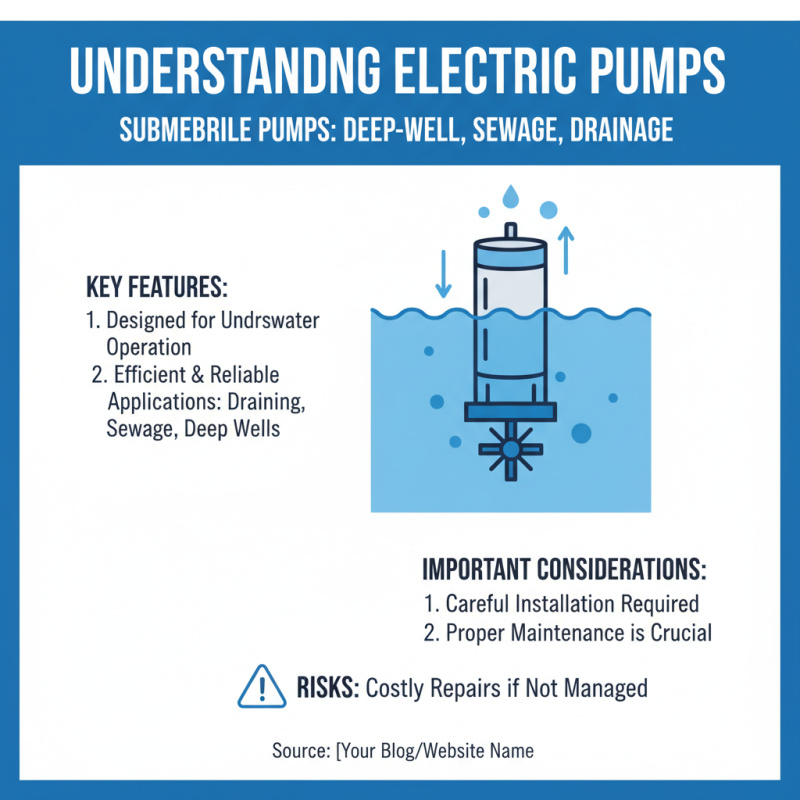
When choosing an electric pump, it's essential to understand the various types available. Submersible pumps are designed to work underwater. They are often used for draining, sewage, or deep-well applications. These pumps are efficient and reliable, but they require careful installation and maintenance. Issues can arise if not properly managed, leading to costly repairs.
Another common type is the centrifugal pump, which moves fluids using rotational energy. These pumps are excellent for transporting water over long distances. However, they can struggle with viscous fluids. It's vital to consider the specific application requirements before selecting this type. The limitations of each pump must be acknowledged to avoid operational problems.
Diaphragm pumps are also worth mentioning. They are often used for chemical transfer due to their ability to handle corrosive substances. While they are versatile, their flow rates might not meet demands in all situations. Understanding your application is key here. It can help prevent frustration and inefficiency in the long run.
Assessing Your Specific Needs and Applications for an Electric Pump
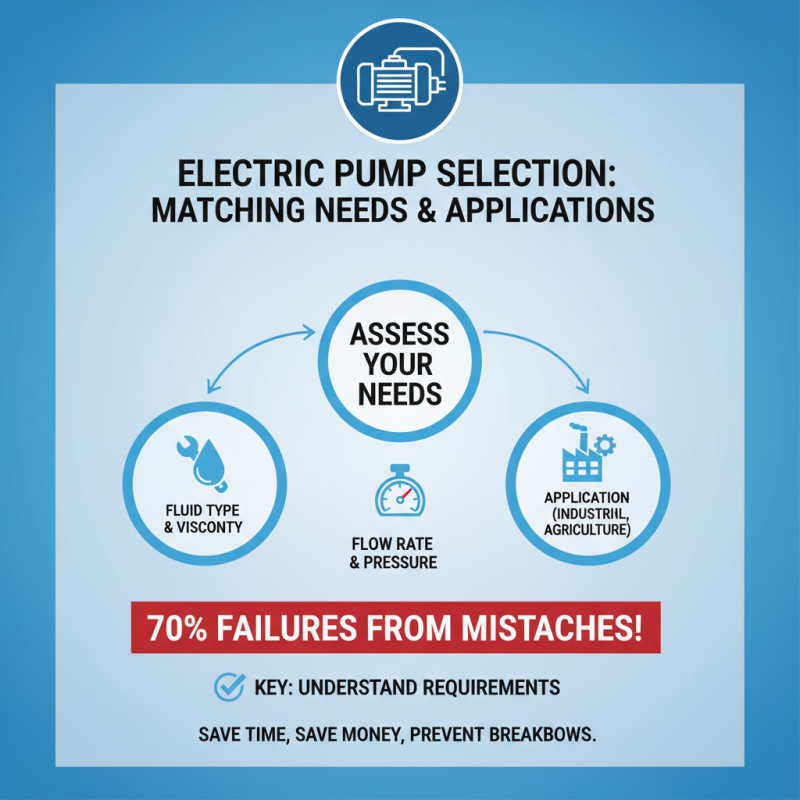
When selecting an electric pump, understanding your specific needs is crucial. Different applications require different pump types. For instance, a recent study by the Hydraulic Institute reveals that nearly 70% of electric pump failures are due to mismatched applications. This highlights the importance of assessing your requirements before making any decisions.
Consider the fluid characteristics you will be pumping. Viscosity, temperature, and chemical compatibility can significantly impact performance. A pump suited for water may not handle corrosive substances effectively. Furthermore, the intended flow rate and pressure requirements play a vital role. According to the American Society of Mechanical Engineers, pumps must deliver precise flow rates for optimal system functionality. A mismatch can lead to inefficiency and increased energy costs.
It is also important to evaluate the environment in which the pump will operate. Residential settings may benefit from quieter models, while industrial applications might prioritize power and efficiency. Noise levels can vary widely, with some pumps reaching up to 85 dBA. This is a factor many overlook, affecting both comfort and compliance with regulations. Understanding these variables will guide you in selecting the best electric pump for your needs.
Evaluating Key Features and Specifications in Electric Pumps
When choosing an electric pump, it’s essential to evaluate its key features. Start with power requirements. Different tasks need varying horsepower or wattage levels. For small tasks like inflating tires, a lower power unit suffices. Larger projects, such as draining pools, require more robust pumps.
Consider the pump's materials and build quality. Durable materials ensure longevity and reliability. However, cheap pumps may still perform well initially. Look at the design too. Some pumps are lightweight and portable. Others may be heavier but offer better stability during use.
Compatibility with various applications is vital. Can it handle water, air, or specific fluids? The pump's flow rate is another critical factor. Higher flow rates mean quicker results. A visual inspection of the pump's connections is advisable. Smaller fittings may limit versatility, while larger options allow for broader applications. Aim for a balance between power and efficiency. These choices shape not only performance but also your overall experience.
Considering Energy Efficiency and Operating Costs of Electric Pumps
When selecting an electric pump, energy efficiency should be a top priority. An energy-efficient pump can significantly reduce operating costs over time. These pumps often have better designs, which lead to less wasted energy. Investing a bit more upfront can result in substantial savings later. It's essential to check the pump’s energy rating and compare similar models to understand their efficiency levels.
Operating costs go beyond just electricity. Maintenance can also impact your budget. An electric pump that requires regular service can add to your expenses. It’s worth considering models known for reliability and low upkeep. While initially cheaper options might look appealing, their long-term costs can be problematic. Investing in a reliable pump pays off through lower operational and repair costs.
Keep in mind the specific needs of your projects. Not all pumps suit every task. Consider the flow rate and pressure requirements. Sometimes the most efficient pump for one application might not be suitable for another. Balancing efficiency with functionality is crucial. Reflect on past pump experiences and strive for a model that meets your unique requirements without unnecessary blows to your budget.
Researching Brands and Customer Reviews for Reliable Electric Pumps
When selecting an electric pump, researching brands and customer reviews is vital.
Industry reports highlight that over 70% of consumers rely on reviews before making a purchase.
This statistic emphasizes the importance of gathering insights from various sources. Look for reviews on reputable websites and forums.
These platforms often feature real user experiences, which can reveal the pump's performance and reliability.
It’s also essential to be aware of potential biases in reviews.
Some reviews may exaggerate or downplay issues. Consider looking for patterns in reviews rather than relying on a single opinion.
If multiple users report similar problems, it's worth taking note. This approach helps in making an informed decision.
Tips for choosing the right pump include: checking the warranty and return policies. A solid warranty can indicate the manufacturer's confidence in their product.
Another tip is to verify the pump's specifications against your needs. Ensure it meets the required flow rate and pressure.
Lastly, don't overlook the importance of customer service. A responsive service team can assist with any issues that arise post-purchase.

 +86 13794985240
 CONTACT NUMBER
 CONTACT NUMBER