How to Choose the Right Connecting Rod?
Choosing the right Connecting Rod starts with the engine’s actual requirements, not the most impressive material or lowest advertised weight. Rod length, big-end width, wrist-pin size, and bearing dimensions must match the crankshaft, piston, and block. Even a small mismatch can affect clearances or assembly. Measure carefully.
The intended use matters just as much. A street engine, a high-revving build, and a heavy-duty application place different demands on fatigue strength, bolt retention, and rotating weight. Forged steel is common for many performance and service applications, while aluminum rods may suit specific racing setups with scheduled replacement. Material alone does not determine durability. Design, manufacturing quality, operating conditions, and maintenance all matter.
Before buying, compare the rod’s specifications with the engine manufacturer’s data and the builder’s measured clearances. Check the fastener type, bearing fit, piston-pin arrangement, and required balancing work. If the engine has been modified, factory dimensions may no longer tell the whole story. That detail is easy to miss.
Ask for traceable product information and follow the supplier’s installation and inspection guidance. A qualified machinist or engine builder can verify measurements and identify compatibility issues before assembly. No component choice removes every risk; excessive RPM, detonation, poor lubrication, or missed inspections can still cause failure. The right Connecting Rod is the one that fits the complete build and its real operating limits. It may not be the lightest option. That is worth reconsidering.
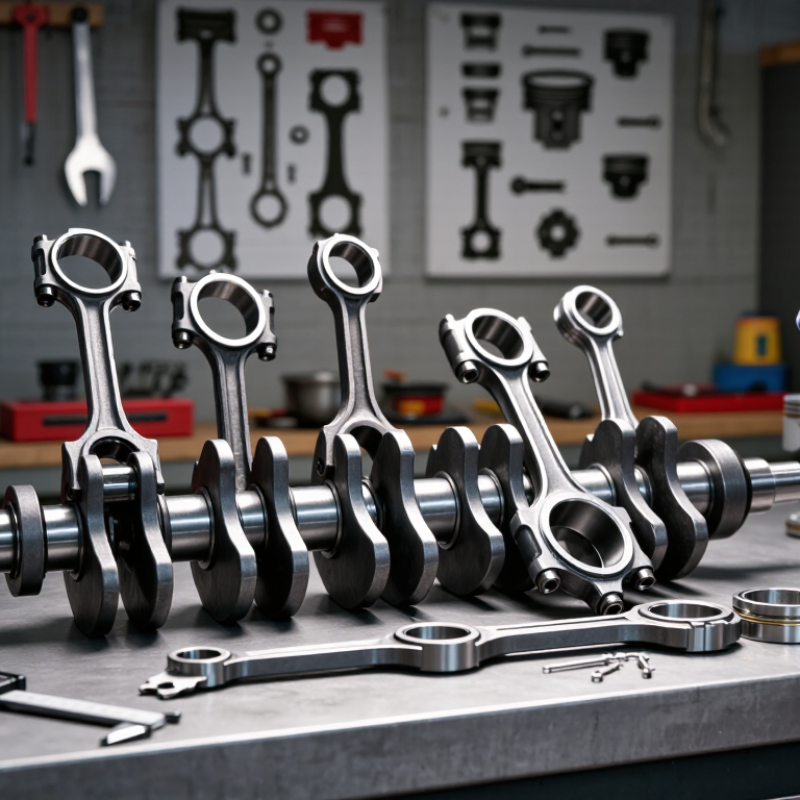
Identify the Engine Type and Intended Operating Conditions
Start by identifying the engine’s layout, displacement, and fuel type. A small naturally aspirated petrol engine has different loads from a turbocharged diesel. Higher cylinder pressure can increase compressive stress on the rod, while high engine speed raises fatigue demands. Do not treat peak horsepower as the whole story. That shortcut misleads.
Next, define how the engine will be used. Short bursts of acceleration, sustained high rpm, and long hours under heavy load create different operating conditions. A road engine that occasionally climbs a steep hill may need a different balance from an engine used for continuous towing. Note the expected rpm range, boost level, and duty cycle. Real use is rarely as tidy as a specification sheet suggests.
Then check the rod’s dimensions and interfaces against the engine: center-to-center length, wrist-pin size, bearing width, and big-end fit all matter. Material and construction should suit the expected loads, but a stronger rod is not automatically the right choice; added mass can affect balance and response. I would verify clearances and the engine’s actual operating history before deciding. A careful measurement can prevent an expensive mismatch.
Check Connecting Rod Dimensions and Component Compatibility
A connecting rod can appear to fit and still cause trouble once the engine turns. Check the center-to-center length, big-end bore, small-end pin bore, and overall width against the crankshaft and piston specifications. Small differences matter. Measure the big-end bore with the cap installed and fasteners tightened to the specified procedure. A loose cap can give a misleading reading.
Compare the rod’s big-end width with the crank journal, then verify the required side clearance. At the small end, confirm the pin diameter and fit; a bushing may need a different finished bore. Also check that the rod clears the block, camshaft, and nearby components through a full rotation. It is easy to focus on length and miss a bolt-head interference. Use suitable measuring tools, and cross-check measurements with reliable component specifications.
Rod length affects piston position, but it is only one part of the fit. Confirm the piston’s compression height and intended pin arrangement before choosing a rod. I would not treat a catalog dimension as proof of compatibility. Measure the parts you actually have. Even careful measurements can be wrong, so repeat them and ask a qualified engine builder when specifications conflict.
Compare Rod Materials and Manufacturing Processes
A connecting rod must suit the engine’s load, speed, and available clearances. Material and manufacturing method both affect strength, weight, fatigue life, and cost. Forged steel is widely valued for toughness under repeated combustion loads, though it adds weight. Aluminum rods can reduce reciprocating mass, but their fatigue life and thermal expansion need careful consideration. Fit matters.
Manufacturing changes how a material performs. Forging compresses heated metal and can create favorable grain flow along the rod’s shape. A billet rod is machined from solid stock, allowing precise geometry, but machining removes material and may leave less favorable grain orientation. Neither method guarantees quality on its own. Heat treatment, machining accuracy, surface finish, and inspection all matter. A lighter rod is not automatically better. A weight figure alone can mislead, and I’d compare it with the engine’s actual operating demands.
Tips: Check the rod’s intended RPM and power range, then confirm bearing clearances and fastener specifications with the engine builder. Look for documented inspection standards, not just claims about material. For a street engine, durability may matter more than saving a few grams. Measure twice. A small clearance error can cause a costly failure.
Balance Strength, Weight, and Performance Requirements
How to Choose the Right Connecting Rod?
Balance Strength, Weight, and Performance Requirements
A connecting rod must handle combustion pressure while changing direction thousands of times per minute. Choosing one means balancing strength, mass, and the engine’s intended operating range. Forged steel rods often suit demanding loads, while aluminum options can reduce reciprocating weight in specific applications. Material alone does not decide the outcome. Design, heat treatment, and manufacturing quality matter, too.
A lighter rod can help an engine respond quickly, but less weight is not automatically better. That matters. If the rod cannot tolerate peak cylinder pressure or repeated high-rpm loading, a small weight saving may bring greater risk. Consider the full combination: engine speed, expected torque, piston mass, crankshaft design, and bearing clearances. Check the rod’s documented load limits and required fastener specifications, then measure clearances during assembly. Not always. Real parts can vary slightly, so measurements are more dependable than assumptions. There is no single ideal rod for every build; a durable street engine and a high-rpm competition engine have different priorities. Even careful calculations can miss details, so compare the selected rod with the engine builder’s requirements and inspect each part before installation.
How to Choose the Right Connecting Rod?
Compare representative material tensile strength and density. Higher strength and lower density can help balance durability and weight, but the best choice also depends on fatigue life, rod design, and engine operating conditions.
Values are representative material properties, not guaranteed connecting-rod ratings. Actual values vary with alloy condition, processing, and product specification.
Verify Quality Standards and Installation Clearances
Choosing a connecting rod starts with evidence, not appearance. Check that the part’s material, heat treatment, and dimensional inspection meet the engine maker’s specifications. Ask for traceable inspection records when available. Look for cracks, burrs, damaged threads, and uneven machining around the big and small ends. A clean-looking part can still be out of tolerance. Measure it.
Installation clearances matter just as much as component quality. Use a calibrated micrometer and bore gauge to measure the crank journal, bearing bore, and related dimensions. Compare the results with the service specifications for that exact engine; generic clearance figures are not a safe substitute. Check bearing oil clearance and connecting-rod side clearance, and confirm the rod faces the correct direction. Keep parts clean, since a small piece of grit can affect a bearing surface. Tighten fasteners using the specified procedure and torque value, not guesswork. Measurements can be easy to misread, so repeat any result that seems unusual.
Tips: Record each measurement beside its cylinder number. Check your tools against a known standard, and recheck clearances after tightening the rod cap. If readings vary, stop and investigate before assembly. It may feel slower, but one extra check is cheaper than finding a tight bearing after startup.

 +86 13794985240
 CONTACT NUMBER
 CONTACT NUMBER