+86 13794985240


Choosing the best Crankshaft Bearing in China requires more than comparing prices or polished product photos. The real test begins with material quality, dimensional accuracy, and reliable factory control. A bearing must support the crankshaft through cold starts, high temperatures, and repeated pressure cycles. Tiny clearance errors can create visible scoring on the journal.
Tom Monroe, an experienced engine builder and technical writer, offers a useful warning: “Bearing clearance is not a guess; it is a measurement.” That principle matters when evaluating Chinese manufacturers. Ask for inspection records, alloy specifications, surface-finish data, and batch traceability. Serious suppliers should explain their copper-lead, aluminum, or tri-metal construction clearly. They should also provide tolerances based on the engine manufacturer’s requirements.
Look closely.
A dependable Crankshaft Bearing supplier will discuss fatigue strength, overlay bonding, oil-groove design, and load capacity without hiding behind vague claims. Factory experience matters, but testing matters more. Check whether the company uses coordinate measuring machines, profilometers, and controlled assembly procedures. Certifications can support credibility, yet they do not replace independent verification.
There is no universal “best” bearing for every engine. That assumption needs reconsideration. A performance diesel, a passenger car, and a rebuilt classic engine may require different materials and clearances. Even reputable factories can produce inconsistent batches if process discipline weakens. Therefore, this article examines Chinese bearing manufacturers through measurable evidence, application knowledge, and after-sales reliability. The strongest choice is not always the cheapest. It is the one that survives real operating conditions.
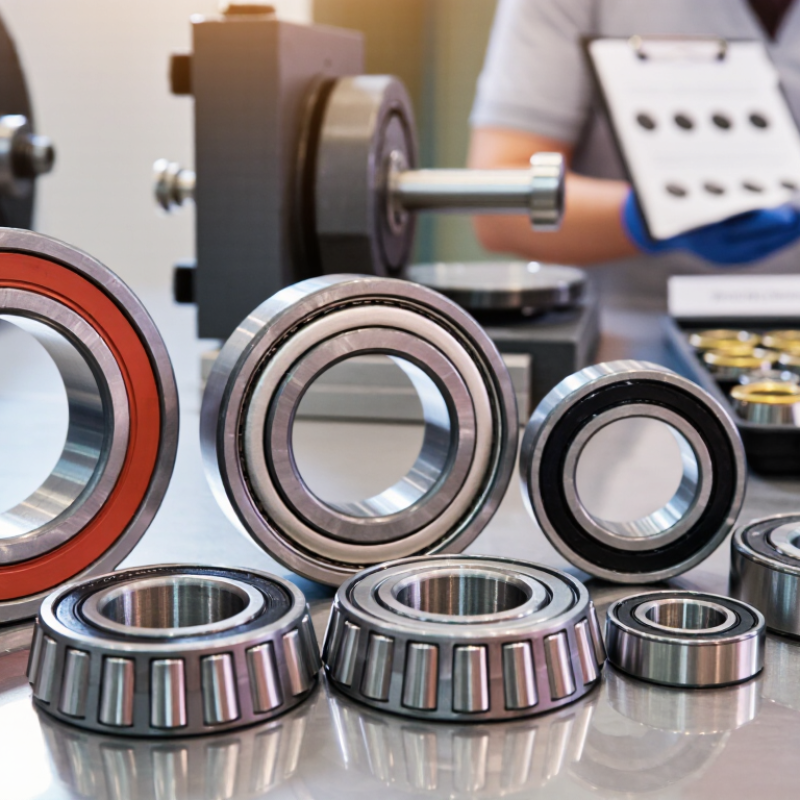
What Is the Best Crankshaft Bearing in China? The answer depends on load, speed, oil quality, and engine design. A crankshaft bearing is a precision-lined component supporting the crankshaft inside the engine block. It maintains a thin oil film between two moving metal surfaces. This film reduces friction, heat, and scoring.
Its function is demanding. Main bearings carry radial loads from combustion and rotating assemblies. Connecting-rod bearings manage changing loads at every engine cycle. Common constructions use steel backing, copper-based or aluminum-based layers, and a soft overlay. Correct clearance is essential. Too little clearance can restrict oil flow and cause seizure. Too much clearance can reduce oil pressure and create knocking sounds.
Applications extend beyond passenger vehicles. Crankshaft bearings serve trucks, agricultural machinery, marine engines, generators, compressors, and industrial power units. OICA reported global motor-vehicle production of approximately 93.5 million units in 2023, showing the continuing scale of engine-related manufacturing. However, the IEA’s Global EV Outlook 2024 recorded nearly 14 million electric-car sales in 2023. This shift changes future demand and raises the value of durable replacement markets.
Industry selection should follow measured data, not price alone. Check hardness, fatigue resistance, dimensional tolerance, oil compatibility, and installation records. Technical specifications from SAE and ASTM provide useful testing references. Yet laboratory results do not always predict field behavior. Contamination, poor alignment, and careless assembly still cause failures. That part is easy to underestimate. A reliable Chinese bearing should match the application, verified inspection data, and the engine manufacturer’s clearance requirements.
What Is the Best Crankshaft Bearing in China?
Main Types of Crankshaft Bearings Made in China
In China, crankshaft bearings are produced in several practical forms. The right choice depends on load, oil quality, temperature, and engine design. There is no universal winner. That matters in real workshops. Main bearings support the crankshaft journals, while connecting-rod bearings handle repeated combustion forces. Thrust bearings control forward and backward crankshaft movement.
Tri-metal bearings use a steel backing, copper-based middle layer, and thin overlay. They suit engines facing high loads and demanding operating conditions. Bi-metal aluminum bearings offer good heat transfer and balanced wear resistance. They are common in many passenger and commercial engines. Some manufacturers also produce sputter-coated bearings for higher surface hardness. Flanged bearings can provide thrust control, depending on the engine structure. Material selection should match the original clearance and crankshaft finish.
In field inspections, I check bearing width, oil grooves, locating tabs, and surface smoothness before installation. Small errors can create uneven contact. Chinese manufacturers often use automated thickness measurement, hardness testing, and coating adhesion checks. Reliable suppliers should provide dimensional reports and fatigue-test data. Still, paperwork alone is not enough. I have seen acceptable-looking shells fail after poor oil clearance. That experience changed my process. I now verify journal size, housing alignment, and installation torque together. A careful trial fit can reveal problems early. Suppliers should also explain alloy composition and production tolerances clearly.
Main types of crankshaft bearings made in China, compared by representative lining thickness used in common engine bearing constructions.
Typical lining thickness varies by engine design and manufacturer. Tri-metal bearings are commonly selected for high-load applications, while aluminum-based bi-metal bearings are widely used for general automotive engines. The best bearing depends on load, oil conditions, shaft material, clearance, and the engine manufacturer's specifications.
The best crankshaft bearing in China is defined by materials, process control, and verified performance. Material selection comes first.
Most reliable bearings use a steel backing for strength and dimensional stability. A copper-lead or aluminum alloy layer supports load and manages heat. Some designs add a thin overlay to reduce friction during engine startup. The surface must resist fatigue, seizure, and corrosion under repeated pressure.
Manufacturing quality depends on more than attractive packaging. Factories should control casting, rolling, bonding, machining, and final inspection. ISO 9001 systems help, while automotive production may follow IATF 16949 practices. However, certificates alone prove little. Buyers should request material reports, dimensional records, hardness results, and batch traceability.
Small details matter. Check oil grooves, locating tabs, wall thickness, and bearing crush. A difference of a few microns can affect oil clearance. Cleanliness matters too; one steel particle can mark a polished journal. Sample testing should include fatigue, bonding strength, and corrosion resistance. Chinese manufacturers with stable laboratories can provide these records before shipment.
A common evaluation mistake is trusting test samples without checking production consistency. I would also question any supplier that avoids failure data. Real engineering includes imperfect batches, corrective actions, and documented learning. Ask how rejected bearings are isolated, measured, and reviewed. That answer often reveals more than a sales presentation.
| Bearing Material / Structure | Typical Construction | Main Performance Advantages | Typical Application | Limitations and Selection Risks | Recommended Quality Checks | Overall Suitability |
|---|---|---|---|---|---|---|
| Aluminum-Tin Alloy Bearing | Steel backing with an aluminum-based lining containing tin; some designs include a thin surface coating. | Good corrosion resistance, strong fatigue performance, and compatibility with modern low-lead or lead-free engine designs. | Passenger vehicles, light commercial engines, and many mass-production gasoline or diesel engines. | Usually less tolerant of severe dirt or poor crankshaft surface finish than softer overlay systems; exact alloy hardness varies. | Chemical composition, lining thickness, hardness, bond strength, fatigue resistance, surface roughness, and dimensional tolerances. | Best general-purpose option when dimensions and alloy properties match the engine specification. |
| Copper-Lead Tri-Metal Bearing | Steel backing, copper-lead intermediate layer, diffusion or nickel barrier, and a thin lead-tin or similar overlay. | High load capacity, strong fatigue resistance, and good performance in heavily loaded crankshaft and connecting-rod applications. | Heavy-duty diesel engines, performance engines, industrial engines, and high-load applications. | Requires accurate oil clearance and crankshaft geometry; the overlay can be damaged by abrasive contamination or incorrect installation. | Layer thickness, copper and lead content, barrier integrity, fatigue testing, seizure resistance, adhesion, and oil-clearance control. | Best for high-load service when the engine design specifies a tri-metal construction. |
| Sputtered Surface Bearing | A conventional bearing structure with a hard, wear-resistant surface layer deposited by physical vapor deposition or a similar vacuum process. | High wear resistance, improved scuffing resistance, and strong protection under elevated load or reduced oil-film conditions. | Modern turbocharged engines, high-speed engines, and applications with high specific power. | Higher process complexity and cost; a hard surface does not compensate for incorrect clearance, poor lubrication, or misalignment. | Coating thickness and uniformity, adhesion, hardness, porosity, wear testing, dimensional accuracy, and surface finish. | Best for demanding engines when the original design requires a wear-resistant coated surface. |
| Copper-Based Bi-Metal Bearing | Steel backing bonded directly to a copper alloy or copper-lead lining, normally without a separate soft overlay. | High thermal conductivity and load-carrying capability; suitable for robust industrial designs. | Industrial engines, older heavy-duty designs, and selected high-load machinery. | Lower embedability and conformability than softer overlay systems; crankshaft alignment and cleanliness are especially important. | Bond quality, alloy composition, hardness, fatigue strength, thermal performance, wall thickness, and geometry. | Suitable only when the engine specification calls for a copper-based bi-metal design. |
| Tin-Based or Soft Overlay System | A harder bearing substrate covered by a relatively soft overlay designed to improve conformability and particle embedability. | Good adaptability to minor alignment errors and strong protection against small contaminant particles during service. | Engines prioritizing conformability, low friction, and protection during normal operating conditions. | Soft overlays may wear faster under extreme load, fuel dilution, poor lubrication, or excessive crankshaft roughness. | Overlay composition, porosity, thickness, adhesion, wear rate, corrosion resistance, and compatibility with the engine oil. | A strong choice for standard service when the original bearing design uses a soft protective overlay. |
| Steel Backing Quality | Low-carbon or low-alloy steel shell providing structural support for the lining and maintaining the bearing shape. | Controls shell stiffness, press-fit behavior, dimensional stability, and resistance to distortion. | All crankshaft bearing types using a steel-backed shell. | Poor flatness, incorrect hardness, weak bonding, or inaccurate locating features can cause premature failure even with a suitable lining material. | Steel chemistry, hardness, shell thickness, roundness, parting-line accuracy, oil-hole position, surface cleanliness, and bond strength. | Essential quality factor for every bearing material and manufacturing source. |
Key Selection Criteria
The best crankshaft bearing is not determined by material name alone. The correct choice must match the engine manufacturer's bearing construction, journal diameter, housing bore, oil clearance, crankshaft hardness, surface finish, operating load, lubricant, and required service life.
For Chinese-made bearings, buyers should request objective inspection records covering dimensional tolerances, material composition, lining or coating thickness, bonding strength, fatigue performance, hardness, surface finish, and traceability. Common technical references include ISO 3548 for plain-bearing dimensions and tolerances, ISO 6621 for internal-combustion-engine bearing terminology and requirements, and the applicable engine or purchaser specification.
China’s large manufacturing base offers many crankshaft bearing choices, but price alone proves little. OICA recorded 93.5 million motor vehicles produced globally in 2023. That volume increases demand for stable, repeatable engine components. Buyers should inspect material structure, dimensional accuracy, and production traceability.
Start with the bearing’s multilayer construction. A steel backing, copper-based or aluminum alloy layer, and suitable overlay can balance strength and wear resistance. ISO 3548-1 provides guidance for metallic multilayer plain bearing dimensions and marking. Check the oil groove position, wall thickness, roundness, and surface roughness against the drawing. A micrometer and bore gauge reveal more than a polished sample.
The U.S. Department of Energy commonly associates engine friction with roughly 10–15% of fuel-energy losses. This makes clearance control important. Too little clearance can cause seizure. Too much can reduce oil pressure. Ask for fatigue testing, hardness data, coating thickness, and batch inspection records. Independent laboratory results are more convincing than a supplier’s brochure.
In practical sourcing, request samples from different production batches. Compare weight, dimensions, and bearing crush. One weakness remains: laboratory results may not represent long-term service conditions. Confirm performance through controlled engine testing, oil-temperature monitoring, and teardown inspection. A dependable supplier should explain failures clearly, not hide them behind perfect paperwork.
What Is the Best Crankshaft Bearing in China?
The best crankshaft bearing depends on the engine, not its country of manufacture. A high-speed passenger engine needs low friction, stable oil retention, and precise clearance. A diesel engine usually demands stronger fatigue resistance under heavy combustion loads. Check bearing material, wall thickness, hardness, and surface coating against the engine’s operating data.
Selection should begin with measured crankshaft journals and the manufacturer’s clearance range. Oil viscosity, pressure, temperature, and contamination levels also matter. For construction equipment, choose a bearing that tolerates shock loads and dusty working conditions. For marine or generator engines, corrosion resistance and long running hours deserve more attention. Ask for dimensional reports, material certificates, fatigue-test results, and traceable production records. Reliable suppliers should explain their testing methods clearly.
Workshop inspection often reveals small problems early. Uneven polishing, blocked oil grooves, or incorrect crush can cause rapid damage. Do not select only by price. An inexpensive bearing may create higher repair costs later. I have also seen buyers overvalue advanced coatings without checking oil compatibility. That assumption needs reconsideration. Fit, lubrication, and verified quality must work together. Before approval, test sample bearings under realistic load, speed, temperature, and lubrication conditions. A practical decision leaves room for adjustment after inspection.