
Leave Your Message

How to Choose the Right Air Filter in 2026?

Choosing the right Air Filter in 2026 is not simply a matter of buying the filter with the highest rating. Your room size, HVAC system, and everyday sources of particles all matter. A dense filter may capture more particles, but it can also restrict airflow if your system is not designed for it. Check the equipment manual before upgrading.

The U.S. Environmental Protection Agency reports that indoor concentrations of some pollutants are often two to five times outdoor levels, and can sometimes be much higher (The Inside Story: A Guide to Indoor Air Quality). That makes filtration worth careful attention. Still, a filter is not a cure-all. Source control and ventilation matter too. The CDC advises using MERV 13, or the highest-rated filter your HVAC system can accommodate. ASHRAE’s Standard 52.2 provides the basis for MERV ratings, which describe particle-removal performance across specified size ranges.

“The air we breathe is the most important environmental exposure we have,” writes Dr. Joseph Allen, an indoor-air researcher at Harvard, in Healthy Buildings. His point helps put filter choice in perspective: cleaner air starts with informed decisions, not just impressive packaging. For portable purifiers, compare independently verified CADR ratings with the room’s size; for central systems, confirm fit and airflow requirements. Small details count. A filter that does not fit tightly may let air bypass it. And the label can mislead. This guide will compare filter types, ratings, replacement schedules, and common trade-offs, while noting where the evidence is less certain.
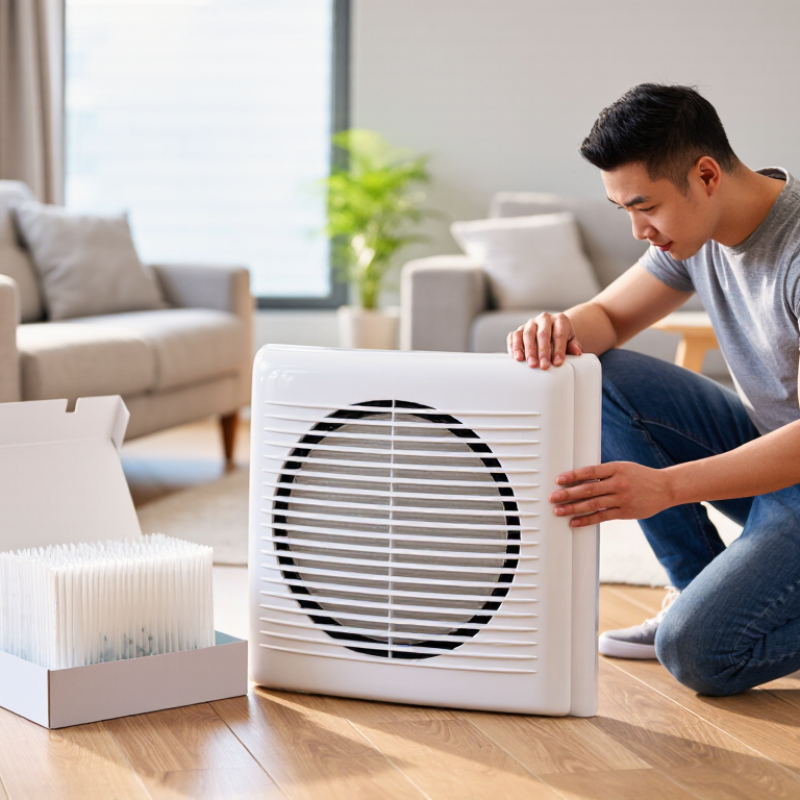
How to Choose the Right Air Filter in 2026?

Identify Your HVAC System and Required Filter Size

Start by locating your HVAC equipment: a furnace, air handler, or heat pump usually connects to the home’s ductwork. The filter may slide into a slot beside the unit, or sit behind a large return-air grille in a hallway. Turn the system off before opening either area. Check the equipment label or manual if you cannot find the filter location. Some homes have more than one filter.

Measure the existing filter’s length, width, and thickness, or read the numbers printed on its frame. Compare those dimensions with the slot, since printed sizes may be rounded and the filter’s actual measurements can differ slightly. A loose filter can let dust bypass its edges; one that is too thick may not fit. This detail is easy to overlook.

Check the airflow arrow on the frame and point it toward the furnace or air handler. Also confirm that the filter type is suitable for your system; a denser filter can restrict airflow in equipment not designed for it. If the old filter is missing, measure the empty slot carefully and consult the manual or a qualified HVAC technician. Guessing can seem quicker, but it may lead to poor fit or reduced airflow.
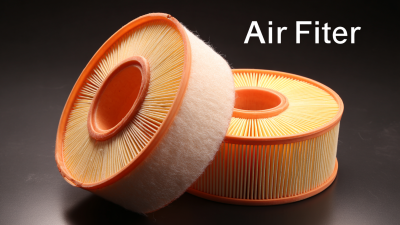

Compare Air Filter Types and MERV Ratings

How to Choose the Right Air Filter in 2026?
Compare Air Filter Types and MERV Ratings

Fiberglass filters are inexpensive and mainly protect HVAC equipment from larger dust. Pleated filters offer more surface area and come in a wider range of MERV ratings. HEPA filters capture at least 99.97% of 0.3-micron particles, according to the U.S. Department of Energy, but their resistance can be too high for many household HVAC systems. A filter that does not fit the system is not an upgrade.

MERV ratings are based on particle-size testing under ASHRAE Standard 52.2. At MERV 13, filters must capture at least 50% of particles sized 0.3–1 microns, 85% of 1–3-micron particles, and 90% of 3–10-micron particles. The U.S. Environmental Protection Agency recommends MERV 13, or the highest rating a system can accommodate. Higher is not automatically better.

Check the HVAC manual before choosing a denser filter. A filter that restricts airflow may strain the system, especially if it is overdue for replacement. Look for the size printed on the frame; it is easy to overlook. Then compare the rating with your household’s needs, such as seasonal pollen or fine cooking particles. Fit matters. The right choice depends on both filtration and airflow, and that balance can take a little testing.

Assess Your Indoor Air Quality Needs

Before choosing an air filter, identify what is actually affecting your indoor air. Note when dust returns, where cooking smells linger, and whether rooms feel stuffy after windows stay closed. Check for visible dust near vents, pet hair, smoke, or damp areas. Keep a simple log for seven days. Patterns matter. A runny nose alone cannot prove that poor air quality is the cause, so avoid treating symptoms as a diagnosis. If symptoms persist, seek qualified medical advice.

Consider each room’s size, how often it is used, and the pollutants you want to reduce. Cooking can create fine particles; pets add hair and dander; outdoor traffic may bring particles indoors. A particle sensor can show changes, but inexpensive readings are not a full assessment of health risks. Humidity also matters: a filter will not fix a leak or remove excess moisture. Match any filter’s airflow rating to your heating or cooling system, and check its manual before upgrading. A very restrictive filter may reduce airflow. That trade-off is easy to miss. Keep windows, ventilation habits, and filter changes in your notes, since one week rarely tells the whole story.

How to Choose the Right Air Filter in 2026? — Assess Your Indoor Air Quality Needs

Use these WHO PM2.5 guideline values as reference points when reviewing indoor air-quality measurements.

WHO’s 2021 guidelines recommend PM2.5 levels no higher than 5 µg/m³ as an annual average and 15 µg/m³ over 24 hours. If readings are often elevated, consider a particle filter with suitable efficiency and airflow for your HVAC system or room, and address pollution sources and ventilation. These guideline values are not a filter-performance rating.

Check Airflow, Compatibility, and Ongoing Costs

How to Choose the Right Air Filter in 2026?

Check Airflow, Compatibility, and Ongoing Costs

A higher MERV rating does not automatically mean a better filter for your home. ASHRAE Standard 52.2-2022 rates filters by measured particle removal. Under its test, MERV 13 filters capture at least 50% of particles from 0.3 to 1 micron and 85% from 1 to 3 microns. But denser media can increase resistance to airflow. Check your HVAC manual for its approved filter size and rating before buying. The wrong fit can leave gaps; excessive resistance can strain system performance.

Match the filter to your equipment and the air you want to clean. For portable air cleaners, AHAM’s AC-1 standard uses clean air delivery rate, or CADR, to measure performance for smoke, dust, and pollen. A useful check: AHAM recommends a tobacco-smoke CADR of at least two-thirds of the room’s square footage, assuming an eight-foot ceiling. Measure the room, not just the open floor area.

Ongoing costs include replacement filters and possible energy impacts from restricted airflow. The U.S. Department of Energy’s Energy Saver guidance recommends checking filters monthly and replacing them at least every three months. Dusty homes may need more frequent changes. Compare annual filter costs, not just the checkout price. It is easy to overbuy here. I’d also note the replacement date on the filter frame; it is a small habit, but imperfect schedules are easy to forget.

Choose a Replacement Schedule and Maintenance Plan

How to Choose the Right Air Filter in 2026?

Choose a Replacement Schedule and Maintenance Plan

A suitable filter needs a realistic replacement schedule, not just a high efficiency rating. The U.S. Department of Energy advises checking central-system filters monthly and replacing them at least every three months. Treat that as a starting point. A home with pets, renovation dust, or frequent heating and cooling may need more frequent changes. Note the installation date on the filter frame, then inspect it in good light. If dust covers the media or airflow seems weaker, check your system instructions before waiting for the calendar date.

ASHRAE Standard 52.2 measures particle-removal performance using MERV ratings. A higher rating is not automatically the better choice: some systems may not be designed for the added airflow resistance. Check the equipment manual for an approved range, and ask a qualified technician if the system struggles after a filter change. Keep the filter’s size and airflow direction handy when buying replacements. Small detail, big difference. A poorly fitted filter can let air bypass its media.

Tips: Set a monthly phone reminder. Keep one correctly sized spare near the furnace, away from damp areas. Record each change and any unusual dust or airflow. If the filter looks clean at three months, still follow the equipment maker’s guidance; appearance alone cannot confirm performance.