How to Choose the Right Arm Cylinder for Your Project?
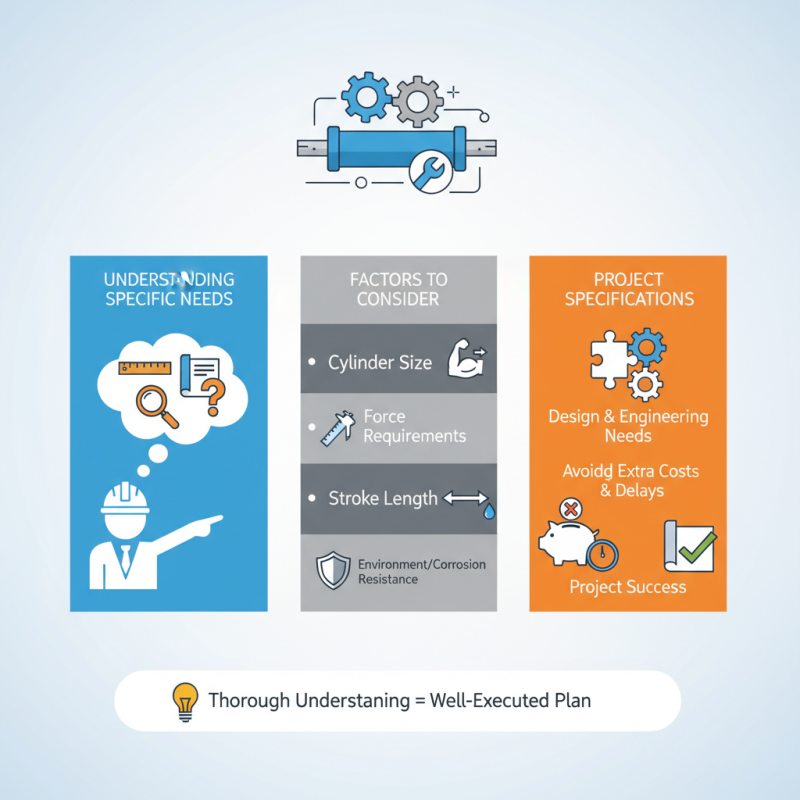
Choosing the right arm cylinder for your project can be challenging. Experts like James Carter, a seasoned hydraulic engineer, emphasize this point. He once said, "Understanding your specific needs is the key to selecting an appropriate arm cylinder."
When selecting an arm cylinder, there are many factors to consider. The cylinder's size, force requirements, and stroke length are crucial. Additionally, the environment where it will operate can affect performance. For instance, materials resistant to corrosion might be necessary for outdoor use. Ignoring these details might lead to performance issues.
Moreover, the choice often relies on project specifications. It is easy to overlook subtle distinctions in design or engineering needs. Underestimating the significance of these elements may result in extra costs or delays. Paying attention to every detail can make a considerable difference in the project's success. A thorough understanding sets the foundation for a well-executed plan.
Understanding the Basics of Arm Cylinders and Their Applications
Arm cylinders are essential components in various machinery and automation projects. They convert hydraulic energy into mechanical motion, providing the force needed to perform tasks like lifting and pushing. Understanding their basics helps in selecting the right one for your application.
When choosing an arm cylinder, consider its size and force requirements. The dimensions must match your project’s constraints. Too small a cylinder may lead to insufficient force, while an oversized one could be unnecessary and cumbersome. Additionally, the stroke length plays a significant role in how far the cylinder can extend before retracting. Assessing the work environment is also crucial. Will the cylinder face high temperatures or exposure to dust and moisture?
Applications can vary widely from automotive to industrial machinery. Each scenario may require different specifications. Misalignments in specifications often lead to inefficiencies. For example, a poorly selected cylinder may lead to jerky motions or even failure in the task. Thoughtful consideration of how and where the arm cylinder will be used can save time and resources.
How to Choose the Right Arm Cylinder for Your Project?
Understanding the basics of arm cylinders and their applications is crucial for selecting the right one for your project. The following chart illustrates the typical applications and required force output of different types of arm cylinders.
Key Factors to Consider When Selecting an Arm Cylinder
When selecting an arm cylinder for your project, several key factors should be taken into consideration. The first is the force requirements. Depending on your application, you may need an arm cylinder that can provide significant force. The National Fluid Power Association reports that the average force output can range from 300 to 1,500 lbs. Understanding your specific needs is essential.
Next is the diameter and stroke length. These variables significantly influence the performance of the arm cylinder. A larger diameter generally means higher force capacity, while a longer stroke allows for more extended motion. Be mindful of the space constraints within your project. Sometimes, accommodating a larger cylinder might prove challenging.
**Tip:** Consider using a cylinder with adjustable stroke length. This allows flexibility and can accommodate future project changes without complete overhauls.
Additionally, think about mounting options. Evaluate if the cylinder will fit well in your design. Different mounting configurations offer various advantages. Sometimes, the right option can improve efficiency and ease of installation.
**Tip:** Don't overlook the importance of mounting hardware. The discrepancy between installed and expected performance might stem from poor installation. Testing a prototype can help gauge the real-world performance of your selected cylinder before full implementation.
How to Choose the Right Arm Cylinder for Your Project? - Key Factors to Consider When Selecting an Arm Cylinder
| Factor |
Description |
Importance |
| Stroke Length |
The distance the cylinder needs to extend to perform the desired task. |
High |
| Load Capacity |
The maximum weight the cylinder can lift or push. |
High |
| Operating Pressure |
The pressure required for the cylinder to function effectively. |
Medium |
| Mounting Style |
The way the cylinder is attached to the equipment. |
Medium |
| Material |
The material the cylinder is made from impacts durability and weight. |
Low |
| Cylinder Type |
Different types include double-acting, single-acting, and more. |
Medium |
Evaluating the Specifications Required for Your Project Needs
When selecting the right arm cylinder for your project, evaluating specifications is crucial. One key aspect to consider is the bore size. A larger bore size can handle more force but may affect speed and energy efficiency. For instance, a study by the International Hydraulic Association indicates that systems with a 5-inch bore can deliver up to 35% more force than a 3-inch bore. Yet, this increased power should match your project's requirements.
Another important specification is the stroke length. Shorter strokes often lead to faster operation, while longer strokes provide more versatility. An analysis from the Mechanical Engineering Journal suggests that cylinders with stroke lengths exceeding 60 inches are increasingly in demand in robotics. However, such specifications can complicate design and increase costs.
It's essential to balance these technicalities with real-world application needs. Engineers often overlook the impact of installation space and mounting options. Inadequate planning can lead to operational inefficiencies or unexpected malfunctions. Adopt a holistic approach when assessing your project needs. Always question if the selected specifications truly align with the operational goals.
Common Types of Arm Cylinders and Their Unique Features
When selecting an arm cylinder for a specific project, it’s essential to know the common types available.
There are three primary types: single-acting, double-acting, and telescoping cylinders.
Each type has unique features that can impact performance. For example, single-acting cylinders utilize pressure only in one direction,
which is simpler but may lack versatility. They work well where space is limited.
In contrast, double-acting cylinders operate in both directions.
This functionality allows for more complex movements. However, they require more parts and can be more challenging to maintain.
Telescoping cylinders provide an extended reach with a compact design when collapsed.
They are ideal for applications requiring significant extension without needing much space.
It's important to consider the specific needs of your project.
Analyze the workload, speed, and available installation space.
Sometimes, opting for a more complex cylinder can lead to maintenance challenges.
Think about the long-term usability of your choice. Staying within budget might limit options, so weigh functions against costs.
A hasty decision could result in retrofitting later, which can be challenging.
Best Practices for Installation and Maintenance of Arm Cylinders
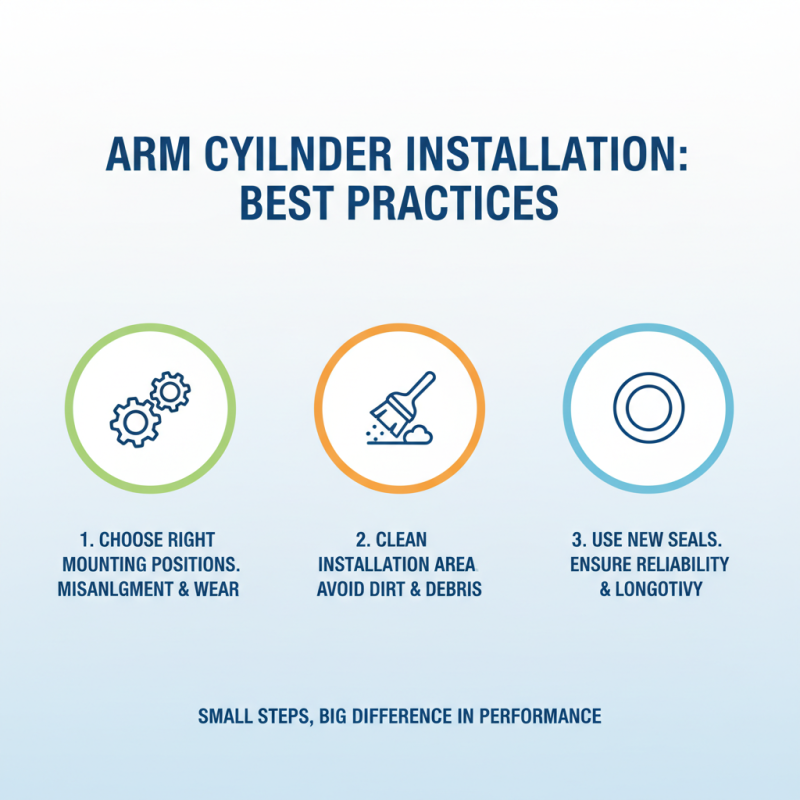
When installing arm cylinders, it's essential to follow best practices to ensure optimal performance. Start by choosing the right mounting positions. Misalignment can cause wear and tear, leading to malfunctions. Properly cleaning the installation area helps prevent dirt and debris from entering the mechanism. Always use new seals for better reliability. These small steps can make a big difference in longevity.
Regular maintenance is crucial for arm cylinders. Check fluid levels and inspect for leaks. A quick visual check can reveal potential issues early. Lubricate moving parts regularly, but avoid over-lubrication, as it can attract contaminants. It's worth noting that sometimes, minor noises can be ignored, but they might indicate a larger problem. Keeping a maintenance log helps track performance and issues over time.
Remember, every project is unique. Sometimes, what works for one application might not suit another. Be open to adjustments throughout the lifecycle of your arm cylinder. Taking time to reflect on previous experiences can lead to improvements. Each installation teaches a lesson, guiding future decisions.
 +86 13794985240
 CONTACT NUMBER
 CONTACT NUMBER