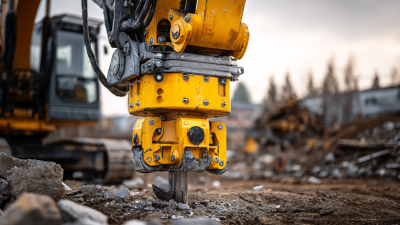
How to Choose the Best Breaking Hammer for Your Needs?
Choosing the right Breaking Hammer is crucial for both professionals and DIY enthusiasts. A Breaking Hammer, designed for demolition and heavy-duty tasks, comes in various types and sizes. Understanding your specific needs is essential to make an informed decision.
Different projects require different tools. The weight, power, and intended use will greatly influence your choice. A lighter hammer might suit small jobs, while heavier models are ideal for larger scale tasks. Evaluating these factors ensures the tool will meet your expectations and deliver the required performance.
Not all Breaking Hammers are created equal. Some may lack durability or power, leading to frustration during use. It's important to review user feedback and expert recommendations. A well-informed choice can lead to successful outcomes and improved efficiency in your work.
Understanding Different Types of Breaking Hammers: A Comprehensive Overview
Choosing the right breaking hammer can greatly influence your productivity and project outcomes. Understanding the different types available can help you make informed decisions. There are generally three main types of breaking hammers: electric, pneumatic, and hydraulic. Each has unique power sources and suitable applications.
Electric breaking hammers are ideal for light to medium tasks. They are commonly used in residential projects. According to industry reports, around 55% of contractors prefer electric options for their versatility and ease of use.
Pneumatic hammers, powered by compressed air, are often used in construction and heavy-duty applications. They excel in breaking concrete quickly. However, they require an air compressor. This dependency can limit their usability on remote job sites.
Hydraulic breaking hammers are the most powerful. They are often used in heavy construction and demolition. Their performance data indicates they can deliver up to 1,200 blows per minute, making them suitable for tough tasks. However, their weight can make them less manageable for some users. It’s essential to assess the specific requirements of your project before deciding. Each type of hammer has strengths and limitations that can greatly impact your operations.
Key Features to Consider When Selecting a Breaking Hammer for Your Projects
When selecting a breaking hammer, several key features must be considered to meet your specific project needs.
Weight is crucial. Lighter hammers are easier to handle but may lack power.
Heavier hammers provide more impact force but can lead to operator fatigue.
Data from industry reports suggest that optimum weight ranges from 30 to 60 pounds for most jobs.
Power is another critical aspect. Look for hammers with a higher joule rating.
A hammer with 30 joules can break concrete effectively, while a 50-joule hammer is more suited for tougher materials.
Additionally, consider the hammer's design.
A well-designed grip reduces vibration and enhances control. Ergonomics play a vital role in productivity and safety,
reducing the strain on the operator’s wrists and arms.
Vibration dampening technology is something to keep in mind as well.
Excessive vibration can be harmful to the user. Reports indicate that tools with advanced vibration control can lower the risk of long-term injuries.
However, not all models incorporate such features.
Therefore, it’s essential to examine user feedback on ergonomics and performance before making a final decision.
Comparing Breaking Hammer Materials: Steel vs. Composite and Their Benefits
When selecting a breaking hammer, understanding the material is vital.
Steel and composite materials each have unique strengths and weaknesses. Steel hammers are known for their durability and effectiveness. They perform well in tough conditions. However, they can be heavy and might cause fatigue during prolonged use. Users should consider their physical limits while choosing a steel hammer.
Composite breaking hammers offer a different approach. They are generally lighter than steel and can reduce user fatigue. Composites are also less likely to chip or crack, making them ideal for certain environments. However, they may not deliver the same power as steel hammers. Users might find themselves wanting more force in demanding tasks.
Ultimately, the choice lies in your specific needs. Do you require heavy-duty performance, or is ease of use your primary concern?
Reflect on your work conditions. Assessing these factors allows for an informed decision. Balancing between weight, power, and comfort is key to finding the right breaking hammer.
Evaluating Weight and Ergonomics: Finding the Right Balance for Comfort
When selecting a breaking hammer, weight and ergonomics play crucial roles.
A heavier hammer may offer better impact energy, yet it can lead to fatigue. According to industry reports, tools weighing between
10 to 20 pounds are optimal for most applications. This range provides a balance
between power and manageability. Users often overlook the importance of grip design,
which can influence control.
Consider the length and material of the handle. A longer handle can enhance leverage but might be cumbersome in tight spaces.
Conversely, shorter handles allow for better maneuverability. Ergonomically designed handles
reduce strain, which is essential for extended use. Research indicates that 60%
of users experience discomfort when improperly equipped.
Tips: Test different weights before purchasing. Hold the hammer in your
dominant hand and see how it feels. Pay attention to vibrations during use. You want a tool that limits excessive shock. Choose
grips that feel natural; this can improve your efficiency. Remember that the right balance
can elevate not just performance but also safety. Always prioritize comfort to avoid long-term injuries.
Assessing Brand Reputation and Performance Data: What Industry Experts Recommend
Selecting a breaking hammer can be daunting. Start by considering brand reputation. Industry experts often highlight the importance of reliability and performance. Researching brands with a solid history in tool manufacturing is crucial. Look for testimonials or user reviews that reflect consistent quality and service.
Tips: Check online forums and discussion groups to learn about real-world experiences. Look for recurring themes in customer feedback. This can guide you to reputable brands that deliver on their promises. Pay close attention to performance data. Certain models may excel in specific applications, while others might disappoint.
Consider the specifications of each hammer. Weight, design, and material can impact your choice. Experts recommend choosing a tool that balances power and control. This ensures you can work efficiently without excessive fatigue. Remember, even the best hammer won't perform well in the wrong hands. Practice is key to mastering its use. Engaging with fellow users can provide insights and foster improvements in your technique.
How to Choose the Best Breaking Hammer for Your Needs? - Assessing Brand Reputation and Performance Data: What Industry Experts Recommend
| Feature |
Value |
Expert Rating |
User Feedback |
| Weight |
10 lbs |
4.5/5 |
Very effective for heavy-duty tasks |
| Material |
High Carbon Steel |
4.7/5 |
Durable and long-lasting performance |
| Handle Type |
Rubber Coated |
4.6/5 |
Comfortable grip, reduces vibration |
| Usage |
Demolition |
4.8/5 |
Ideal for concrete and masonry work |
| Price Range |
$50 - $100 |
4.4/5 |
Good value for performance |

 +86 13794985240
 CONTACT NUMBER
 CONTACT NUMBER