China Top Connecting Rod Manufacturers and Their Innovations?
The "Connecting Rod" industry is witnessing remarkable innovations. As automotive technology advances, manufacturers in China are leading the way. According to a recent market report by Allied Market Research, the global connecting rod market is expected to reach $2 billion by 2025, highlighting the industry's growth and importance.
Dr. Li Wei, a prominent expert in the automotive manufacturing field, emphasizes, "Innovation in connecting rod design is vital for enhancing engine performance." This emphasizes the need for manufacturers to invest in R&D. Companies are now using advanced materials and production techniques to improve durability and efficiency, pushing boundaries further.
However, despite these advancements, challenges persist. Some manufacturers struggle with scaling these innovations effectively. Maintaining quality while reducing production costs is a common concern. The continual evolution of the connecting rod industry requires not only technical improvements but also strategic collaboration among manufacturers to address these challenges. Innovation must be balanced with sustainable practices for long-term success.
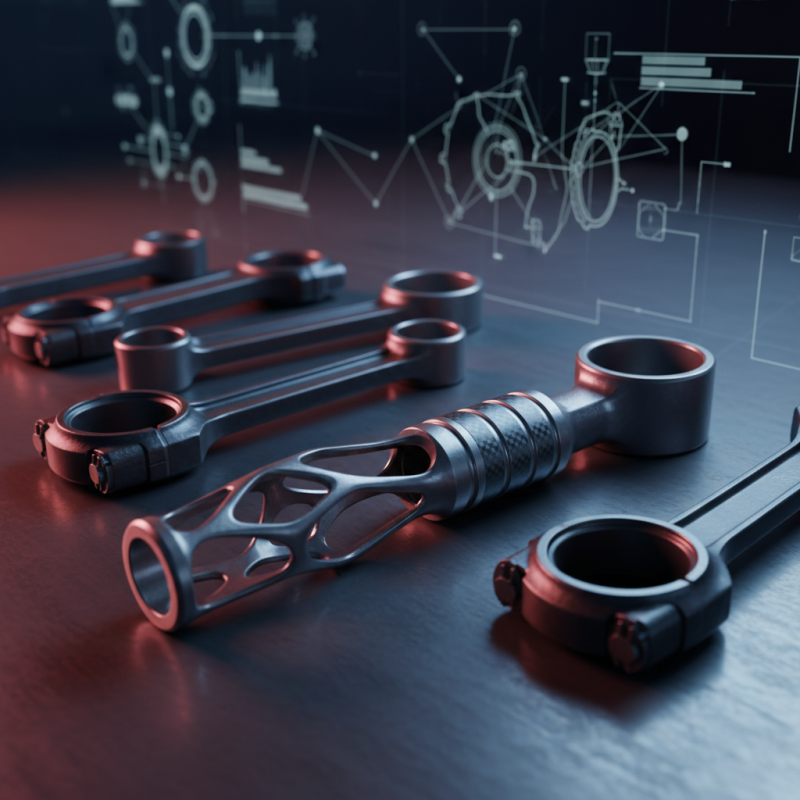
China's Leading Connecting Rod Manufacturers in the Automotive Industry
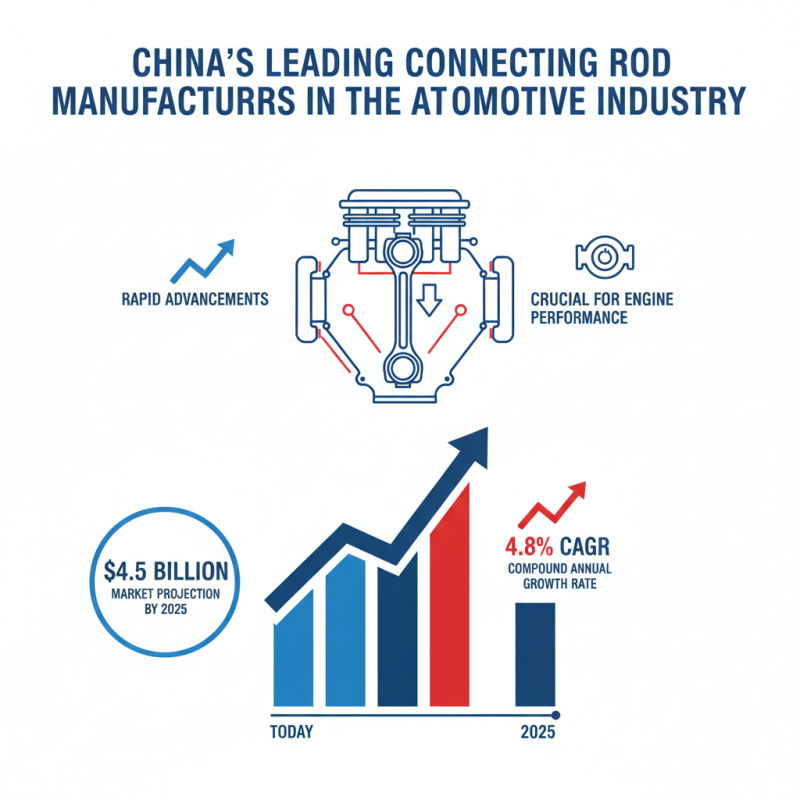
China's automotive industry is witnessing rapid advancements, particularly in connecting rod manufacturing. This component plays a vital role in engine performance. Recent data indicates that the market for connecting rods is projected to reach $4.5 billion by 2025, reflecting a compound annual growth rate (CAGR) of 4.8%.
Leading Chinese manufacturers focus on innovative materials and designs. For instance, many are adopting lightweight alloys and composites to enhance fuel efficiency. This shift is critical as global emissions regulations become stricter. Despite these advancements, challenges remain. Manufacturers often struggle with balancing cost and quality. Producing high-strength, lightweight components can lead to increased production costs.
Another area of innovation is the use of advanced manufacturing techniques. 3D printing and CNC machining are becoming more prevalent. However, not all manufacturers have kept pace with these technologies. Some still rely on traditional methods. This discrepancy can hinder competitiveness. As the industry evolves, companies must address these challenges to remain relevant.
Innovative Technologies in China's Connecting Rod Production
Innovative technologies in connecting rod production are transforming the automotive industry in China. Manufacturers are increasingly leveraging advanced materials to enhance the strength and durability of connecting rods. For example, high-strength aluminum and composite materials are gaining traction. These materials not only reduce weight but also improve fuel efficiency. The shift toward lightweight components is a response to stringent emission regulations.
In the production process, automation plays a crucial role. Robotic systems are used for precise machining and assembly. This reduces human error and increases consistency in quality. Additionally, some manufacturers are incorporating artificial intelligence for predictive maintenance. This technology helps in identifying potential failures before they occur, thus minimizing downtime.
However, challenges remain. Despite the advancements, there is a need for continuous improvement in design methodologies. The integration of new materials and processes can result in unexpected issues. Manufacturers should invest in research and development to address these problems. Regular feedback loops and quality assessments can foster innovation. Only through constant learning can the industry truly excel in producing cutting-edge connecting rods.
Key Players and Market Share: Overview of Top Manufacturers
The global connecting rod market is evolving rapidly. Major manufacturers have recently focused on enhancing performance and reducing weight. According to a recent report, the market is expected to grow at a CAGR of 5.6% through 2027. This growth is driven by demand from the automotive sector.
Key players are innovating with new materials and manufacturing technologies. For instance, advanced alloys are being adopted to improve durability. Companies are also investing in precision engineering. This allows for more efficient engine performance. Smaller players are struggling to keep pace with these advancements.
Tips: When choosing connecting rod manufacturers, consider their innovation track record. Evaluate their technological capabilities and market presence. Reliable partners are often those that invest in R&D.
Despite these advancements, challenges remain. Not every manufacturer can meet stringent quality standards. Variations in production can lead to inconsistencies. It's important for buyers to conduct thorough evaluations of potential suppliers. The emphasis on quality assurance cannot be overlooked.
Recent Developments and Trends in Connecting Rod Innovation
Recent developments in connecting rod innovation highlight the ongoing efforts of manufacturers in China. Advanced materials, such as high-strength aluminum and carbon fiber composites, are transforming the production landscape. These materials offer improved durability and reduced weight, which can enhance overall engine performance. Manufacturers are increasingly focusing on lightweight solutions to improve fuel efficiency and power output in vehicles.
Another trend is the integration of smart technologies into connecting rod design. Sensors can now monitor stress and strain in real-time, providing valuable data for engineers. This innovation allows for proactive maintenance and can prevent catastrophic failures. While this integration is promising, challenges remain, such as ensuring compatibility with existing systems. Not all manufacturers have adopted these technologies, and those that do must navigate complex data analytics.
With the push for sustainability, some companies are exploring recycling options for materials. However, the effectiveness of these initiatives is still uncertain. There is tension between cost management and environmental responsibility. Many manufacturers are seeking a balance, yet they may struggle to find a viable approach. The road ahead appears complex, filled with opportunities for growth and necessary adjustments.
Sustainability Practices in China's Connecting Rod Manufacturing Sector
The connecting rod manufacturing sector in China is witnessing a transformative shift towards sustainability. Many manufacturers are adopting eco-friendly practices to reduce their environmental footprint. According to the latest industry reports, over 35% of companies have initiated steps to implement green technologies. This includes using recyclable materials and minimizing harmful emissions during production.
Some companies are investing in innovative processes that lower energy consumption. Embracing automation and digitalization is common, with reports indicating that these approaches can reduce energy use by up to 20%. However, challenges persist. Not all manufacturers prioritize sustainability, citing cost implications as a significant barrier. This inconsistency in adoption may hinder overall progress in the sector.
Moreover, while regulations push for more sustainable practices, some companies lag behind in compliance. The lack of awareness about sustainability in connecting rod manufacturing often results in missed opportunities. There is a growing need for educational programs to improve understanding. Industry experts believe that enhancing knowledge in sustainable practices will be crucial for future advancements. As manufacturers strive for innovation, reflecting on these gaps is essential for long-term sustainability in the connecting rod sector.

 +86 13794985240
 CONTACT NUMBER
 CONTACT NUMBER