+86 13794985240


China’s automotive scale makes its gasket supply base worth examining closely. The China Association of Automobile Manufacturers reported 31.282 million vehicles produced in China in 2024. OICA recorded about 92.5 million vehicles produced worldwide that year. These figures describe vehicle production, not gasket sales. They still show the scale of the market that suppliers serve.
A Cylinder Head Gasket must seal combustion pressure while separating oil and coolant passages. Small surface defects can matter. Buyers comparing Chinese manufacturers should look beyond price and catalog size. Relevant checks include material options, dimensional control, compression testing, application coverage, and batch traceability. Multilayer steel designs, for example, may suit some engines, while other applications require different constructions. The right choice depends on engine design and operating conditions.
This guide examines manufacturers through those practical criteria, alongside production capability and quality documentation. Public company data can help, but it rarely reveals real-world failure rates. That is a limitation. A polished website is not proof of consistent sealing performance, either. Buyers should verify specifications and request test records for the intended engine application. The comparison aims to inform, not declare a universal winner. OICA and CAAM provide useful market context; neither report ranks gasket makers. That distinction matters.
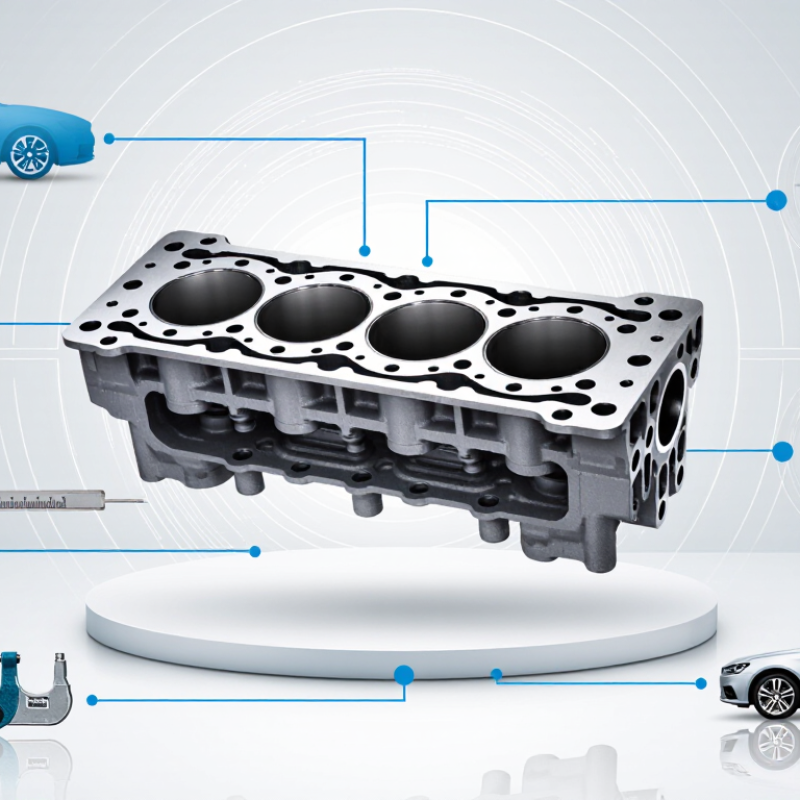
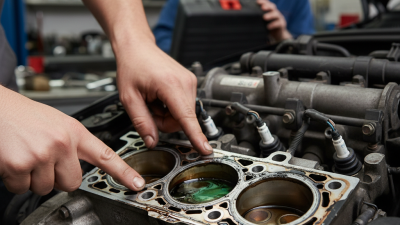
A cylinder head gasket sits between the engine block and cylinder head. It seals each combustion chamber while keeping oil and coolant in their separate passages. This thin layer faces intense heat, pressure, and repeated expansion as the engine warms and cools. It must seal. Materials vary by engine design and may include layered steel or composite construction. The correct gasket depends on the engine’s specifications, not just its shape.
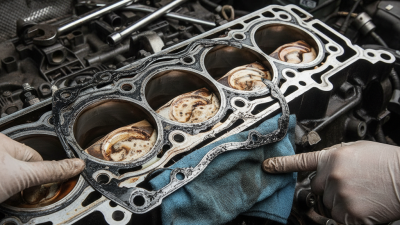
These gaskets are used in cars, trucks, motorcycles, and many stationary engines. A failure may allow coolant into the oil, combustion gases into the cooling system, or compression to escape between cylinders. Symptoms can include overheating, rough running, or unexplained fluid loss, but none proves the gasket is at fault. Diagnosis matters. A pressure test or compression check can help narrow the cause. That part is easy to miss. During replacement, technicians inspect the mating surfaces for warping or damage and follow the specified tightening sequence. Even careful work can go wrong if the surfaces are not measured accurately; replacing the gasket alone may not address the underlying problem.
China Best Cylinder Head Gasket Manufacturers?
How Cylinder Head Gaskets Are Designed and Manufactured
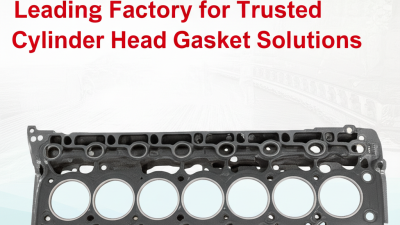
A cylinder head gasket must seal combustion pressure, coolant passages, and oil channels between two metal surfaces. Design starts with engine-specific measurements: bore openings, bolt locations, surface finish, and expected clamping load. Many modern gaskets use stacked steel sheets with embossed beads. These ridges concentrate sealing force around cylinders and fluid passages. A thin coating helps accommodate small surface imperfections. The details matter. Even slight misalignment can cause leaks or uneven pressure.
Manufacturing commonly involves precision stamping, edge finishing, coating, and careful layer alignment. Quality checks may include visual inspection, dimensional measurement, and tests for coating consistency. The exact test plan depends on the engine and gasket design. The U.S. EPA’s 2023 Automotive Trends Report puts average new-vehicle fuel economy at 26.0 mpg for model year 2022. That figure does not measure gasket performance, but it highlights why reliable engine operation matters. A gasket alone cannot guarantee efficiency. Real-world conditions complicate things.
Tips: Confirm the gasket matches the engine code, and check head and block flatness before installation. Keep parts clean. Small scratches can matter. Manufacturers should also review test results across production batches; one good sample is not enough.
China’s cylinder head gasket manufacturing landscape is shaped by a large automotive production base and a diverse supplier network. The China Association of Automobile Manufacturers reported 31.282 million vehicles produced in 2024, with sales reaching 31.436 million. These figures indicate the scale of the domestic vehicle sector, but they do not directly measure gasket demand. Gasket requirements vary by engine design, operating temperature, and service conditions.
Manufacturers work with materials such as multilayer steel and composite constructions. Production checks can include coating consistency, bolt-hole alignment, surface flatness, and sealing performance under pressure. Small defects matter. A slight distortion around a coolant passage may cause problems only after repeated heating and cooling. Suppliers serving original equipment and the replacement market may also face different requirements for traceability and product variation.
The industrial picture is not perfectly even. Capabilities and inspection practices can differ between factories, so buyers should ask for material specifications, dimensional reports, and documented test methods. CAAM’s 2024 industry figures provide useful context, not proof of any supplier’s quality. That distinction is easy to miss. Reliable comparisons need product-level evidence, including samples tested against the intended engine and installation conditions.
| Dimension | Industry and Product Context | What Buyers Should Verify |
|---|---|---|
| Main gasket constructions | Common constructions include multi-layer steel (MLS), metal-composite, and, for certain applications, solid-metal designs. Selection depends on engine design and service conditions. | Confirm the construction matches the engine specification and the original gasket design. |
| MLS gasket features | MLS gaskets use multiple formed metal layers. Embossed sealing beads and surface coatings may be used to help seal combustion, coolant, and oil passages. | Ask for layer configuration, material details, coating specifications, and application-specific installation requirements. |
| Materials | Depending on design, materials may include stainless steel, other sheet metals, graphite, or non-asbestos composite materials. | Request material specifications and, where required, test reports or declarations covering restricted substances. |
| Typical manufacturing steps | Processes can include sheet-metal stamping or forming, coating, layer assembly, die cutting, and inspection. The process varies by gasket type and factory equipment. | Check process controls for critical features such as bore openings, sealing beads, coating coverage, and finished thickness. |
| Product range | Manufacturers may serve passenger vehicles, commercial vehicles, and industrial or off-highway engines. Coverage differs by supplier and engine application. | Match the part to the engine code, model year, cylinder configuration, and any relevant drawing or part reference. |
| Quality checks | Relevant checks can include dimensional inspection, thickness measurement, visual inspection, coating checks, and application-specific sealing or leak tests. | Request a sample inspection report and clarify test methods, acceptance limits, sampling frequency, and lot traceability. |
| Quality management | ISO 9001 is a quality-management-system standard. IATF 16949 is an automotive quality-management-system standard; neither alone proves that a particular gasket fits or performs correctly. | Verify certificate scope, issuing body, validity, and site coverage; evaluate product-specific evidence separately. |
| Custom and OEM-oriented production | Custom production may be based on customer drawings, samples, or agreed technical specifications, subject to tooling and engineering capability. | Agree on drawing revision, tolerances, material, coating, tooling ownership, sample approval, and change-control procedures. |
| Supplier evaluation | A useful comparison considers application coverage, engineering support, documented quality controls, production capacity, and responsiveness—not price alone. | Compare equivalent specifications, approved samples, lead-time commitments, warranty terms, and corrective-action processes. |
| Export and packaging | Export arrangements and packaging depend on the order and destination. Gaskets should be protected from contamination, bending, and damage to sealing surfaces during storage and transport. | Confirm packaging, labeling, documentation, shipment terms, and any destination-market requirements before placing an order. |
The best supplier is not simply the one with the lowest quote. Compare gasket samples against your engine’s bore, coolant passages, oilways, and bolt-hole locations. Ask how the supplier controls sheet thickness, coating coverage, and bead or fire-ring geometry. Request inspection records for flatness and critical dimensions, plus test data for sealing under heat and pressure. A neat sample helps, but it cannot prove stable production. Ask for batch traceability and a clear process for handling defects.
Tips: Send an engineering drawing and one reference sample. Ask for material specifications, production checks, and recent test reports. Confirm whether testing matches your engine’s operating conditions. Details matter.
When assessing a factory, review its equipment, quality procedures, and communication with technical staff. A capable supplier can explain why a gasket suits a particular engine, not just repeat catalog claims. If possible, inspect a production run or arrange an independent sample check before placing a large order. I would not treat a certificate as a substitute for product-level evidence; that is an easy detail to overlook. Compare lead times and packaging too, since warped or contaminated parts can undermine otherwise sound work.
China Best Cylinder Head Gasket Manufacturers?
Key Factors in Choosing a Reliable Chinese Supplier
China’s manufacturing scale offers buyers many options, but production volume alone cannot prove gasket quality. The China Association of Automobile Manufacturers reported 30.16 million vehicles produced in 2023. This large automotive base supports a deep supply network; it does not verify any individual factory. Ask suppliers for material specifications, dimensional inspection records, and batch traceability. For a cylinder head gasket, check bore diameter, bead placement, and surface finish against your engine drawings. Request compression and thermal-cycle test results for the intended operating conditions. Ask for evidence.
A reliable supplier should explain how it controls incoming materials, tooling wear, and changes between production batches. Request sample parts and compare measurements with the approved drawing before placing a large order. The World Bank’s 2023 Logistics Performance Index ranked China 19th overall. That offers useful context for shipping, not a quality rating for a gasket maker. Confirm lead times, export packing, and how defects are documented and addressed. I would still question a supplier whose report lacks test conditions or clear acceptance limits. A neat certificate is reassuring, but actual inspection data matters more.
Suggested evaluation weights for comparing suppliers. These are decision-making guidelines, not survey results or ratings of specific manufacturers.
Prioritize documented quality systems, application-specific material and design capability, and verifiable testing. Adjust the weights to match your engine, operating conditions, and purchasing requirements.